Decoding Autism – Teaching an App to Say “Maybe”
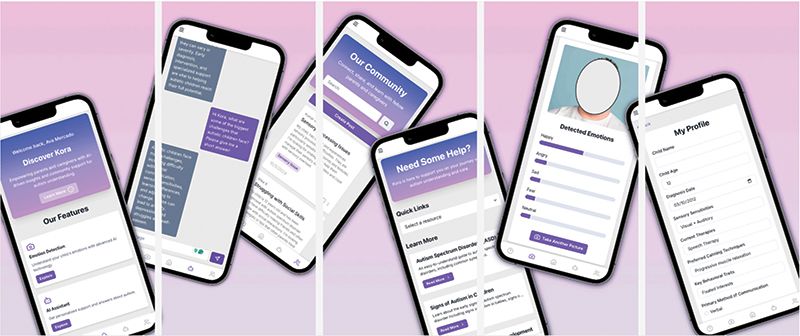
(Above): Screens from Kora, a free app that helps caregivers understand the emotions of autistic children. The emotion screen, second from right, shows several possible readings instead of one answer. (Image courtesy of Shashank Madala)
A New Jersey teenager taught himself AI to build Kora, a free app that helps caregivers understand autistic children, and designed it to admit what it doesn’t know. Shashank Madala’s take on deciphering autism.
Take a picture of a child using the Kora app, and it answers the way a careful friend would, with a few possibilities. A row of bars shows how closely the child’s expression matches feelings like happy, sad, angry, afraid and neutral. The final call about what the child is feeling stays with the adult holding the phone.
That is on purpose. Most of us are used to technology that sounds certain, like a map app that names the exact minute we will arrive, or a chatbot that answers any question in a confident paragraph. I built Kora to sound less sure of itself, and the reason is my younger cousin.
My cousin is autistic. For most of his childhood, the people around him loved him but were still misreading him. When he was upset, the adults in the room, me included, would start running through guesses: maybe he was hungry, maybe he was tired, maybe the lights were too bright. We were often wrong, and the more confident the guess, the longer it took us to notice.
Watching people love him and still miss him is why, at 15, I taught myself machine learning.
Machine learning sounds intimidating, but the core idea is simple. Instead of writing out every rule for a computer, you show it a huge number of examples and let it find the patterns on its own, which is roughly how your phone learns to recognize your face. I wanted to know whether that idea could help adults notice what they were missing.
The result was Kora, a free app for the parents, teachers and therapists of autistic children. Besides the emotion feature, it has an AI assistant that answers caregivers’ questions, short guides about autism, and a community board where parents and caregivers can post questions and share what has worked for them. There is also a profile where a family can record things like their child’s sensory sensitivities and favorite calming techniques.
My first versions of Kora were built to be quick, with one clean answer and as few taps as possible. Eventually I realized I had built a faster version of the exact mistake I was trying to prevent, a confident guess that makes everyone stop looking. So, I rebuilt the app to show several possible readings at once and to point out where it is least certain. A caregiver who was still unsure, could keep watching the child, and that attention is the whole point.
There is research behind that choice. Autism researchers describe something called the ‘double empathy problem’ – when autistic and non-autistic people misunderstand each other, the misunderstanding runs in both directions. In my family’s case, that meant the adults had a lot of the learning to do, so Kora is built for the adults. It is an assistant for caregivers, which means it does not diagnose autism, screen for it or give anyone a score, and I would rather families know those limits up front.
Kora also needed real people to test it. I volunteered with Autism New Jersey programs, and I asked caregivers and staff there to try the app and tell me what was not working.
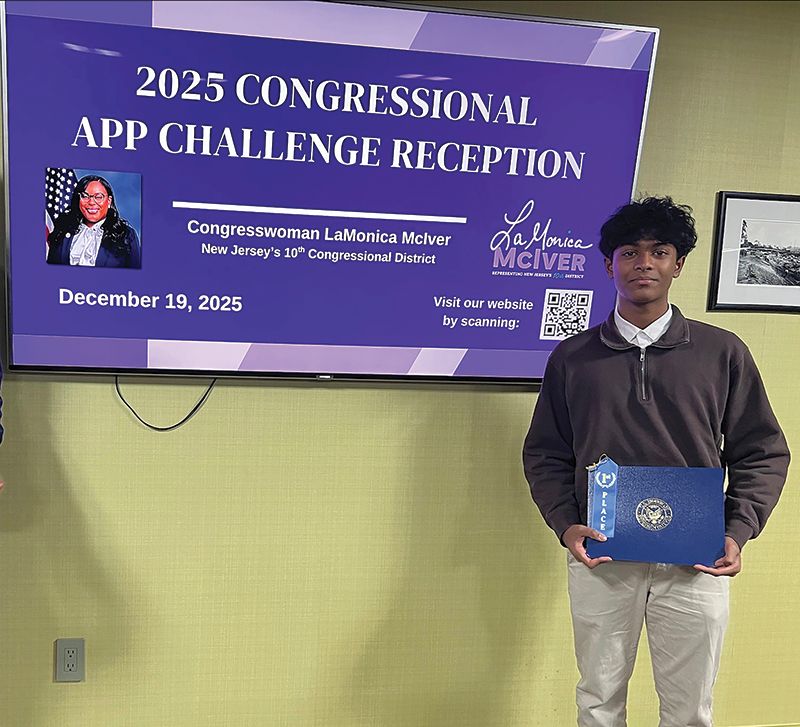
In December 2025, Kora took first place for New Jersey’s 10th Congressional District in the Congressional App Challenge, a national competition hosted by members of Congress. Three other students, Ayur Munipalli, Liam Casey, and Joseph Pontoriero, joined me for the competition. Kora was displayed in the U.S. Capitol, I received a Certificate of Congressional Recognition from Rep. LaMonica McIver, and this summer the New Jersey Senate and General Assembly honored me with a Joint Legislative Resolution that names me as Kora’s creator. Kora now has more than 700 users across therapy centers in 12 countries, and it is still free.
One parent who tried an early version said, “For the first time, I didn’t feel like I was guessing.” That sentence is the reason the app exists.
My generation is going to grow up surrounded by AI that sounds sure of itself. Building Kora convinced me that the most useful thing a machine can do is help people pay closer attention to each other, and sometimes that means saying “maybe.” Kora will never know my cousin the way his family does, and it isn’t supposed to. Its job is to help the people who love a child slow down and look again.