CA Gubernatorial Candidate Xavier Becerra Structures Campaign Around Immigration, Healthcare and Trump
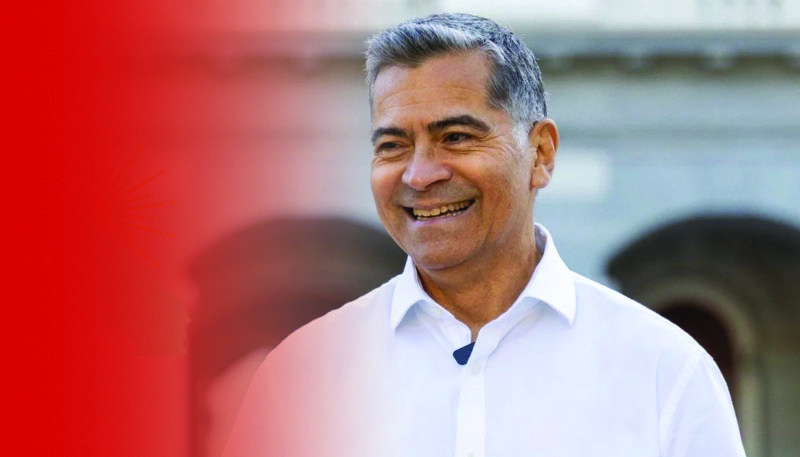
Xavier Becerra, the former California attorney general and U.S. Health and Human Services secretary, is positioning himself as the Democratic gubernatorial race’s most experienced anti-Trump candidate.
At a media briefing hosted by American Community Media, Becerra laid out a platform centered on limiting federal immigration enforcement, defending Medi-Cal coverage for undocumented residents and using California’s political and legal infrastructure to challenge what he described as illegal overreach by a second Trump administration.
Becerra, who is currently leading polls in the 2026 gubernatorial race, argued that his record in state and federal government gives him tools and institutional knowledge that his opponents lack.
As attorney general, he frequently challenged the first Trump administration in court. As HHS secretary, he led a federal agency with a budget larger than California’s own. Now, he is making the case that those experiences have prepared him to lead California through another period of conflict with Washington.
“I am ready. I will not need training wheels when I become governor,” he said. “My job is to restore that faith, ignite that dream, and make people believe again.”
Immigration and Federal Enforcement
On immigration, Becerra described the Trump administration’s Immigration and Customs Enforcement operations as a “mercenary force” and said California would use the courts to moderate federal agents operating in the state.
“ICE, while it’s a federal agency, still must obey the Constitution. It still must respect state laws when it goes beyond its jurisdiction,” he said, “so we’ll make sure our immigrant families know that they are protected.”
A 2023 investigation found that during Becerra’s tenure at HHS, the agency relaxed longstanding safeguards, including background checks and file reviews meant to protect children from trafficking, and lost contact with one-third of the unaccompanied migrant children moved out of overcrowded shelters.
Becerra did not directly address that issue. Instead, he pointed to his record from Trump’s first term, when he was California attorney general.
When the administration pressured California law enforcement to participate in immigration raids, Becerra refused. The Trump administration sued, but Becerra won in court and later recovered $57 million in resources that had been withheld in retaliation.
“We took them on in court, and we got our $57 million back,” he said. “We will partner with them where we must, but we will fight when it’s necessary. We can have a relationship with the federal government as we must, but we will not take a knee.”
Becerra also responded to a U.S. Citizenship and Immigration Services memo released May 22 that may require most green card applicants to leave the United States and apply from abroad. He said he was “absolutely against it,” calling the policy part of a broader pattern of targeting immigrants regardless of legal status.
“These are people who are qualifying to be here, which means they have to have a good record,” he said. “It just once again proves that Donald Trump never intended to go after only the criminals and the people who were doing harm. He’s just after anyone who’s an immigrant, anyone who doesn’t look like him.”
Becerra also pledged to oppose private, for-profit immigration detention in California and apply state standards to any such facilities operating within the state.
Healthcare and Medi-Cal
Healthcare drew some of the briefing’s most detailed exchanges.
Asked to respond to opponents’ claims that he had backed away from support for single-payer healthcare, Becerra rejected that framing. He cited his 1993 congressional co-sponsorship of a Medicare for All bill, as well as his work expanding the Affordable Care Act and Medicaid enrollment to a record-high 24.2 million people covered through private marketplaces.
“I never backed away, and so that’s an accurate representation of where I have been,” he said. “It’s a distortion that some of my opponents have been peddling for some time, but I’ve been consistent throughout my career in public service.”
Ahead of elections, a statement on Becerra’s campaign website describing him as an “advocate for single payer” has been removed and replaced with a 12-point plan focused on funding preventive care, reducing waste, lowering drug costs and supporting Medi-Cal and CalFresh enrollees whose coverage is threatened by federal cuts.
On Medi-Cal coverage for undocumented residents, Becerra argued that keeping people covered is the fiscally responsible approach. He said uninsured residents do not stop needing medical care, but instead turn to emergency rooms, the most expensive point of delivery, with costs ultimately absorbed by California taxpayers.
“It’s the fiscally responsible thing to do, because the moment Donald Trump kicks those 3 million Californians off of their Medi-Cal, guess what, they don’t stop using health care,” he said. “If you work hard in California, it makes no difference to me where you come from. If you’re working hard, you deserve to have access to the health care that you need.”
Becerra extended that argument to providers, warning that mass disenrollment could threaten hospitals and community health centers if reimbursement dries up.
“The doctors, hospitals, community health centers, if they know that the person walking through their door is coming with insurance, they know that they will get reimbursed,” he said. “If those people walking through their doors do not have insurance, those doctors, hospitals, community health centers know that at some point they’re going to have to start closing their doors because they can’t do business for free.”
He also described the crisis facing California’s rural hospitals as requiring a governor willing to fight Washington for the state’s share of federal funding. More than half of California’s rural hospitals now operate at a loss, while 13 are at risk of closure.
“I know how to squeeze every possible cent out of those federal resources, because I ran that agency,” he said. “I know where the money is.”
Under HHS, Becerra filed more than 120 lawsuits against Trump’s first administration, with an approximately 82% win rate among the 28 cases resolved.
Homelessness and Prevention
On homelessness, Becerra pitched a prevention-first strategy, arguing that keeping vulnerable Californians housed before they reach crisis is far cheaper than the cost of shelter and reentry once they are already on the street.
“It costs so much more money to pick someone off the street,” he said.
Becerra said he would work with families facing job loss, medical debt or other destabilizing events before eviction becomes unavoidable. He also said he would expand only programs that show positive measurable outcomes.
“I’m going to do everything I can to work with those families, find out what it takes to keep them housed rather than see them become homeless.”
Campaign Money and Political Backing
Becerra also pushed back against comparisons between his campaign funders and those of billionaire rival Tom Steyer, who has drawn a record $53 million in opposition spending from corporate-backed “super PACs” and business groups.
Many of those same interests have spent more than $13 million backing Becerra, including the anti-single-payer California Medical Association, California firefighters, Planned Parenthood and union groups. Larger corporate donors include PG&E, Airbnb, nearly $1 million from Meta and half a million from Chevron.
“The average donation to my campaign is $59,” he said, referring to direct grassroots contributions. “That’s not a billionaire writing himself a check. It’s people like teachers and nurses and union workers who are supporting this campaign and helping fuel us to victory.”
Becerra framed his candidacy as a defense of working families, including immigrant families like his own.
“I am going to make full use of every lever of government as governor to protect the families that were just like my parents, working really hard, never asking for a lot, just hoping that that would open the door to opportunity, if not for them, then for their kids,” he said.
As voters head to the polls, Becerra is presenting himself as a candidate who would be ready on day one to confront Washington, defend immigrant communities and protect California’s healthcare safety net.
Today is Election Day, get out and vote California!
Image courtesy of American Community Media