Fire Season Looms as California Communities Prepare to Fight Back
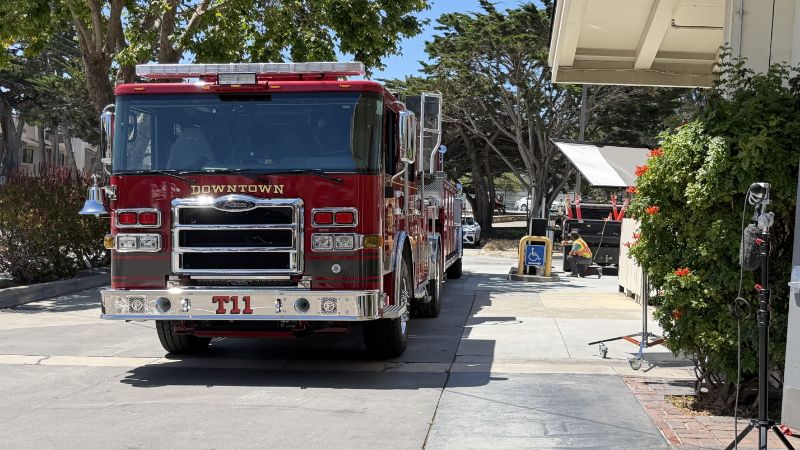
As California heads into another wildfire season, the work of prevention is beginning far from the flames — in fire stations, rural communities, defensible spaces around homes and grant programs aimed at helping local agencies reduce risk before disaster strikes.
At a June 12 media event hosted by American Community Media, the California Fire Foundation and the Pacific Gas and Electric Company Foundation announced the launch of this year’s Wildfire Safety and Preparedness Program, a grant initiative now entering its ninth year. The program will provide $1.8 million to fire departments, fire agencies and community organizations working in underserved and high fire-risk areas.
The announcement took place against a familiar California backdrop: fire trucks nearby, photos of parks and vegetation on display and the growing awareness that wildfire preparation has become a year-round responsibility.
Monterey Fire Chief of Station 11 Patrick Moore told reporters that one of the most important tools in slowing wildfire spread is defensible space. In high-risk areas, he said, crews look for adequate distance between trees and homes — at least 100 feet — to reduce the chance that flames can quickly move from vegetation to structures.
That kind of work is exactly what the Wildfire Safety and Preparedness Program is designed to support.
Since 2018, the program has provided about $12.25 million in PG&E Foundation grants to fire agencies serving Monterey County. The money has helped pay for vegetation management, specialized equipment and fire safety education — needs that Angie Carmigani, executive director of the California Fire Foundation, said “can get lost in a budget” provided by the state.
Across California, the risk is widespread. More than 350,000 people live in towns located entirely within zones considered at very high risk of fire. More than 2.7 million people live in “very high fire hazard severity zones,” according to the California Department of Forestry and Fire Protection.
The California Fire Foundation administers the grant program, which has awarded 431 grants to fire departments and community organizations statewide, with a focus on PG&E’s service areas in northern and central California.
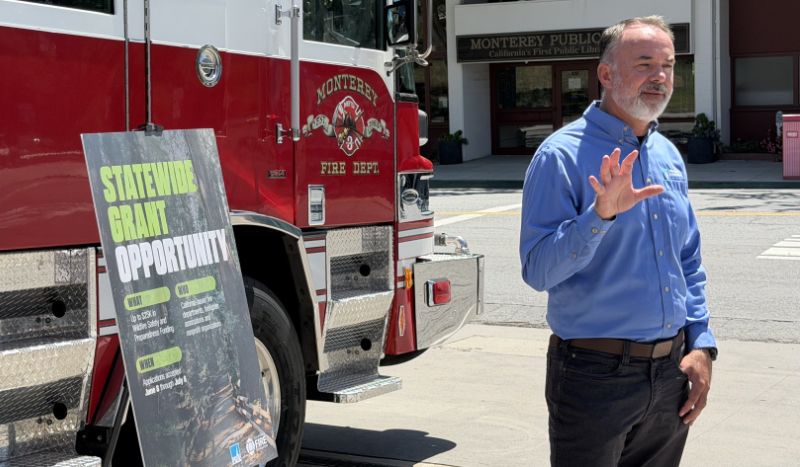
Jeremy Howard, a PG&E representative at the event, said the latest round of funding is meant to reach the agencies closest to the problem.
“Today really is about kicking off the application period for the wildfire Foundation grant,” Howard said. “PG&E is offering a million dollars to the California Wildfire Foundation. So that foundation is then the one that will take the million dollars from PG&E, and they will receive all the applications from the many fire agencies, fire departments, the nonprofits that support wildfire risk reduction. And they will distribute that out in the form of individual grants to various departments.”
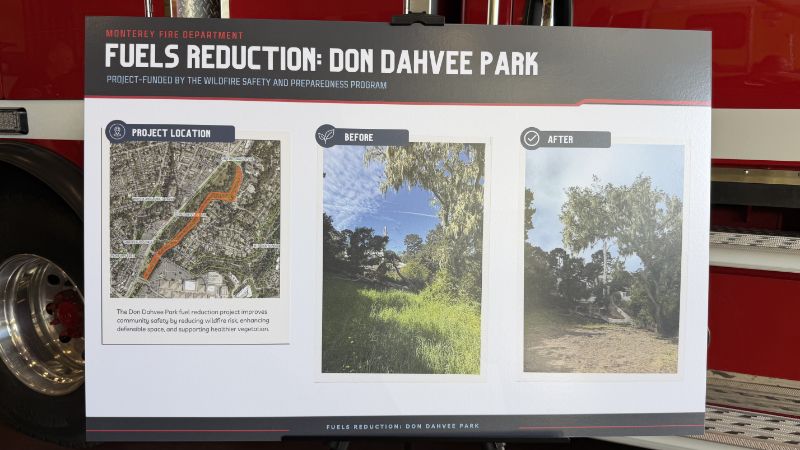
Howard said the grants generally serve three purposes: reducing fuels, educating the public and helping fire departments acquire equipment.
“The first is for us to help and ensure that fire departments and communities that are in hard to reach areas, underserved areas, get the resources they need to be able to do some of these fuel mitigation projects,” he said.
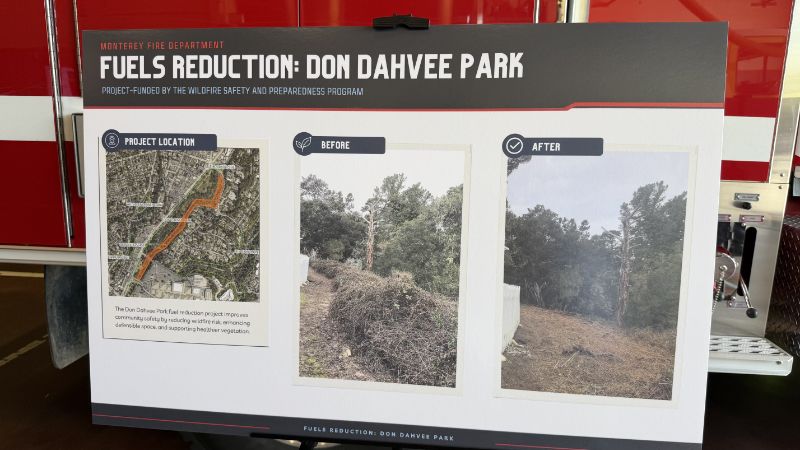
Fuel mitigation means removing the brush, branches and other vegetation that can help a fire spread. In practice, it can mean clearing growth around homes, creating fire breaks or using specialized equipment to grind up brush and remove hazardous material.
“When you can remove the fuel and create a fire break, the fire may burn up to that break and stop,” Howard said. “But if that fuel is there, it will keep burning right up into houses.”
The program also supports public education, especially in communities where language or resource barriers can make emergency preparation harder. Previous grants have funded outreach campaigns that included 12,000 multilingual brochures for under-resourced communities in English, Spanish, Chinese, Hmong and Vietnamese.
Howard said that while PG&E provides funding through its foundation, local fire agencies and community organizations are the ones best positioned to determine what their residents need.
“The idea being that we’ll rely on the local agencies, because they know their communities best in what the needs are,” he said. “There might be a fire department, a rural fire department that gets a grant. Well, they can use that grant money to go out and do public education in their area. They can do the fuel reduction projects. They can buy equipment to help them protect firefighter safety.”
Last year, grant funding supported 1,500 pieces of personal protective equipment, including helmets, boots, gloves, goggles and fire shelters. It also helped remove more than 33 million square feet of hazardous trees and brush.
For smaller or more remote departments, that kind of funding can help cover equipment that would otherwise be difficult to afford.
“If a particular fire department in a certain area needs PPE, so personal protective equipment, or they need a piece of equipment that grinds up brush and removes fuel so they can work on fuel mitigation projects, then we’d be able to use the grant money to buy equipment on top of that,” Howard said.
The program’s focus on prevention also extends to residents. Howard said preparation can include simple but critical steps, such as removing pine needles from gutters, trimming weeds before they dry out and keeping vegetation away from structures.
“The idea is, you know, an ounce of prevention is worth a pound of cure,” he said. “So we want to ensure that the communities are prepared for wildfire.”
The charitable contributions are paid by PG&E shareholders, not customers. Eligible fire departments, fire agencies and nonprofits across PG&E’s service territory are encouraged to apply.
All images Amar D. Gupta/Siliconeer.