Marginalized Voters Face Mounting Structural and Legal Hurdles Ahead of Midterms
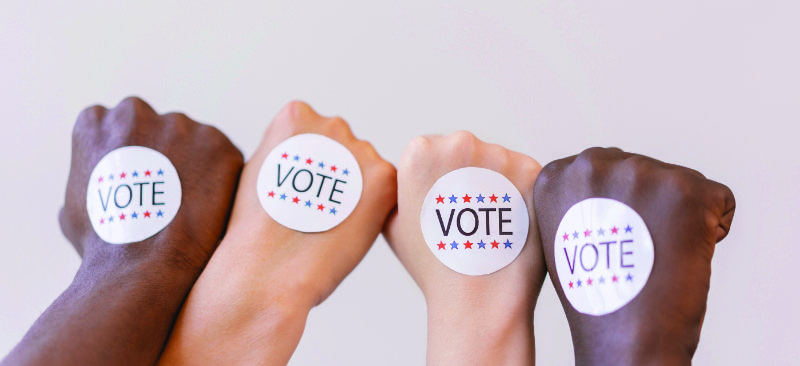
With 38 days separating the country from Election Day, a new and overlapping constellation of legal, logistical, and psychological barriers threatens to silence millions of minority voters in the 2026 midterms. Supreme Court decisions handed down in the weeks before the November cycle have simultaneously reshaped mail-in ballot administration and expanded federal databases that states may use to screen voter eligibility, while redistricting maps in at least nine states dilute the representational power of communities of color.
At the same time, voter ID laws now in force in 38 states, shrinking drop-box infrastructure in key battlegrounds like Georgia, and persistent transportation deserts in rural and reservation communities are compounding a crisis that voting rights advocates describe as the most layered since the 2013 Shelby County decision gutted core provisions of the Voting Rights Act. Voter participation surged during the 2024 presidential election, with nearly two-thirds of Black, Asian American, and Latino voters casting ballots, but experts warn that sustaining those gains in a down-ballot midterm cycle amid escalating suppression risks will be enormously difficult.
In a media briefing on September 25 hosted by American Community Media, a group of voting rights advocates and legal experts laid out the practical, legal, and cultural forces converging on the November ballot. Their testimony painted a picture of a democracy under multifront assault, where a single plastic card or a 40-mile drive can determine whether a citizen’s voice is heard.
Speakers

- John Yang, President and Executive Director, Asian Americans Advancing Justice | AAJC
- Jacqueline de Leon, Senior Staff Attorney, Native American Rights Fund
- Monica Spencer, Georgia State Director, VoteRiders
- Jesus Zamora, Field Director, Mi Familia Vota
Mail-in Ballots and Shifting Legal Ground
The Supreme Court’s recent rulings have introduced uncertainty into a process millions of voters depend on. A decision issued just days before the September gathering reestablished that mail-in ballots will not be administered by the federal government or the U.S. Postal Service, leaving state election officials in charge. “How you have voted in the past with respect to mail-in ballots should generally prevail,” Yang told reporters, though he cautioned that state-level administrative changes made in the intervening two years mean voters must verify their options with local election officials. For many in the Asian American community—where roughly 40 percent of voters already cast ballots by mail—the shift may be the preferred path, but it also demands individual planning.
A second ruling, announced the same morning, permits the Trump administration to deploy an expanded database, potentially including Social Security information, to help states screen voter rolls for citizenship. Yang called the decision “very disappointing” and said it “leads to additional confusion,” noting that federal databases are “oftentimes inaccurate” in what they say about voters and their citizenship status. Because voter rolls remain under state control, the practical impact will vary by jurisdiction, but advocates worry that the new framework could disproportionately affect immigrant and naturalized communities already grappling with identity-document requirements.
The Voter ID Chasm
Spencer opened her remarks with a stark statistic: 34 million voting-age Americans lack an updated photo ID, and 21 million eligible voters cannot easily access the citizenship documents—birth certificates, passports, naturalization papers—required to obtain one. Citizens of color, she said, are “almost four times more likely” than white citizens to lack a government-issued photo ID.
Georgia illustrates the point with particular severity. Seventy-six thousand eligible voters in the state do not hold the ID needed to cast a ballot, and seven of the state’s ten historically Black colleges and universities cannot use their student credentials at the polls, while students enrolled in the public University of Georgia system can. Drop boxes, once a lifeline for working voters, are now limited to one per 100,000 residents, no longer available around the clock, and locked inside government buildings—impractical for people holding two jobs. A 2021 law, SB 202, widely described as one of the nation’s most restrictive voting bills, forced a precipitous decline in absentee participation: a Democracy Docket study found Black voters using mail-in ballots fell from 29 percent in 2020 to roughly 5 percent in 2025.
The cost barrier compounds the problem. In Georgia, obtaining a replacement ID runs from $10 to more than $100 depending on the supporting documents needed. A free voter-specific ID exists, but it still requires a birth certificate—a document that many voters, including those born at home by a midwife, domestic violence survivors who fled their homes, and returning citizens who lost their papers during incarceration, do not have. Spencer recounted working with a young woman who visited the Department of Driver Services five times, each time told she needed additional documentation, before VoteRiders intervened and she was finally able to vote.
“One of the young women I worked with told me, after she got her ID, ‘I feel human again,'” Spencer said. “Our humanity is encased in a little plastic card, and without it, an individual is devalued, discriminated against. And in the case of voting, is not allowed to vote.”
Redistricting and the Dilution of Representation
Zamora described the redistricting landscape in Texas, where Latino communities make up more than 40 percent of the state’s population yet remain structurally underrepresented. “We do have a lot of Latino districts in Harris County that were unfortunately split from different neighborhoods and mixed in with different income-status homes,” he said, describing how new maps carve Latino communities into transient apartment precincts with unfamiliar designations. In Dallas County, the commissioners court shut down more than 100 polling locations.
De Leon framed the issue in structural terms for Native communities. At-large elections at the county and school-board levels, she explained, allow a slate of commissioners to be elected by majority vote across an entire jurisdiction, even when Native residents constitute 40 to 50 percent of the population. Because turnout in those communities is low, Native candidates are effectively never elected. The degradation of Section 2 of the Voting Rights Act through this year’s Supreme Court decisions, she warned, has stripped advocates of a primary tool for challenging gerrymandering and at-large systems, and NARF is now investigating whether the ruling in Calais leaves any viable legal pathway to fight back.
Yang confirmed that redistricting has redlined communities in Alabama, Florida, Louisiana, Missouri, North Carolina, Ohio, Tennessee, Texas, and Utah, and he tied the moment to a long history of suppression: “Whether we go back to poll taxes in the late 1800s, literacy tests, the pure intimidation that has happened in the ’60s, we can’t let that deter us. This is our opportunity to make our voices heard.”
Transportation Deserts and the Distance to a Ballot
For many voters, the ballot box is not a destination but a journey. Zamora recounted a canvass in the Pasadena–South Houston area, where a mother with two disabled daughters broke down in tears explaining that her neighborhood floods regularly and that she must roll her children’s wheelchairs down a ramp before a 30-to-40-minute walk to the closest polling place, with no car or public transit available. In Texas, where voter registration requires a paper form submitted by a deputy registrar—with no online registration—and mail-in ballots are restricted to voters who are disabled or out of county during the entire voting window, elders who serve as pillars of their families are among the most vulnerable.
De Leon reported that Native voters on rural reservations face distances of 20, 30, 40, 50, and up to 100 miles to reach a polling place or registration site. Many lack street addresses, have no residential mail delivery, and must pay for a P.O. box at a post office that may itself be miles away. Poor roads, poverty, and a lack of vehicle access compound the problem. “Native Americans are really structurally locked out of voting in many cases, despite our requests and demands for on-reservation access,” she said.
Fear, Misinformation, and the Polls
Rumors of ICE agents at polling places have fueled anxiety across immigrant communities, and Yang acknowledged that the fear is real even as he described the reports as unconfirmed. He urged voters to know their rights: ask “Am I being detained?” and “Am I free to go?” If an officer cannot provide a clear reason for a stop, the person should be allowed to leave. Speaking loudly, he advised, so that nearby poll monitors can intervene. He emphasized that English proficiency is not a legal requirement for voting and that the federal Voting Rights Act guarantees language assistance; voters may bring an interpreter or translator, provided the person is not their employer or union representative.
For the Asian American community, where 90 percent of members are immigrants or children of immigrants, AAJC has deployed a multilingual hotline—888 API VOTE—operating in English and nine Asian languages to help voters confirm registration, understand their options, and navigate the process. Yang urged voters to “develop a plan as to how you want to vote, make sure you know how you do that, and execute on that plan.”
The Native American Vote and the Fight for Equitable Access
De Leon described the Native American vote as a “deciding vote” in statewide races from Michigan and Minnesota to Wisconsin, New Mexico, Arizona, and Alaska, yet said communities continue to face “neglect towards Native communities and Native voters, on all sides of the political spectrum.” NARF, the nation’s largest and oldest nonprofit law firm dedicated to Native American rights, is sending nearly 300 poll watchers into rural Indian Country to observe elections and document obstacles, from malfunctioning machines and forgotten power cords to abbreviated polling hours and racially charged border towns where a “No Indians Allowed” sign still hangs in South Dakota and a sundown siren rang in Nevada as recently as 2023.
The organization is also pushing for passage of the Native American Voting Rights Act, a bipartisan bill that would mandate on-reservation polling and registration sites, require acceptance of tribal IDs, and eliminate address requirements for voting. “It is incredibly frustrating to us that when we ask for straightforward and equitable services, we are often denied,” De Leon said.
What Voters Can Do
Spencer closed with a direct call to action: “Check your vote registration status and your ID. Check your precinct location, as well as your sample ballot, as we head to the polls.” Zamora urged journalists and community partners to show up “year round” rather than only in election season, noting that Mi Familia Vota’s organizers canvas Houston, Dallas, and the Rio Grande Valley 365 days a year, and that the Latino community is “eager and hungry” for reliable information. De Leon reminded reporters that “discrimination still exists in America, and we need the tools to be able to fight them in a full and functioning Voting Rights Act.”
Images courtesy of American Community Media