Vibe.Check | More than Coconuts, We are Indians!
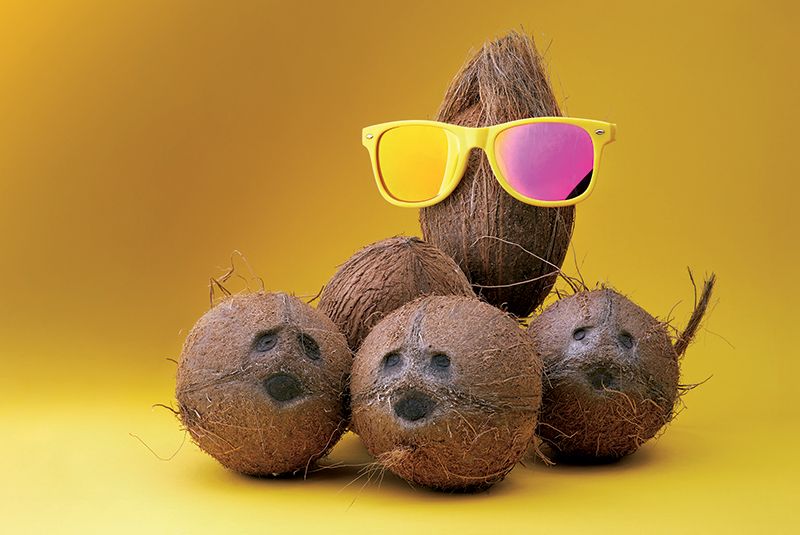
We are not just coconuts. We are Indian Americans.
It goes without saying that Indian Americans have come a very long way in the last few decades. Many Fortune 500 CEOs are Indian Americans. The top innovators and researchers around the globe are of Indian/Asian origin. The community isn’t tied or held back by old and primitive thought processes. We have come far. We long for more and we expect more. We have elevated ourselves as people, and Americans need to accept that. In fact, it’s fair to say that Asian Americans in general are now running the American economy. After all, immigrants came to the promised land for the American Dream.
But times are changing, and we should be looking elsewhere. America is not the darling it once was. We can thank our current administration for that. People of our background are finding more success back in the motherland, other Asian or European countries, and the UAE.
We looked beyond the headlines, Instagram, and pesky LinkedIn posts to get a real beat on our world today.
We start by talking about the coconut stereotype and the e-word. That’s right, Vansh Gupta dared to explore the $8.6 trillion ethnic market.
But maybe markets and their value don’t matter if living in a simulation might not be as far-fetched as we once thought. 14-Year old Samara Kothari explores Simulation Theory and questions our whole existence. Talk about the intersection of technology and reality.
Speaking of technology, Dharani Purushotham highlights the different approaches to technology in Japan compared to the States. Cultural differences drive innovation differently in both technological powerhouses.
Getting deeper into science and tech, we explore avenues other than AI. We hear the sigh of relief. Vikshar Athreya decrypts the use of holography in neuroscience. For our neuroscience geeks in the room, this is an exciting piece to read.
Speaking of exciting, Hannah Scherer shares her experience at SF Design Week earlier this year. With events hosted by Adobe, Intuit, Rivian, and more, Scherer was ecstatic to connect with like-minded creatives like herself.
You may notice a pattern in our print edition. Our first half focuses on thought-provoking pieces. The second half is always focused on more cultural and lifestyle material. This issue is no different. Still fondly connected to our roots, we keep up with the motherland.
We start by sharing our condolences and a tribute to everyone impacted by the Air India 171 disaster. A resilient country, India has been able to make strides in the BRICS summit, and we also recap the importance of one of India’s oldest wellness practices – yoga. The disaster, however, raises many unanswered questions.
Gen-Z editor Janam Gupta visited India earlier in the year and shares his experience in the home of Bollywood – Mumbai. All we can say is that the street food scene in India is divine. Their aviation landscape, now that is a different story.
The Indian food scene on our side of the world is also growing. We explore hidden gems to visit around the two valleys and in between. Whether it’s the local salt flats or the growing scene of Indian food trucks and cafes, we can’t get enough of California’s ethnic diversity. We said the e-word again. Oops!
Speaking of hidden gems, we finally found a BMW in the lineup that doesn’t make us gag when we see it. In fact, it could be the best BMW on the market. Don’t quote us on it. It’s still about $90-100K for a decently packaged one. However, many Indians and Asian Americans are fond of the BMW X5, and we can see why.
This is the perfect segue to our message for the world. As Indians, we hate being typecast in a certain way. We are proud of who we are and what our roots stand for. We are not just about coconuts, curry, and weddings. Although, this print edition has many coconuts. We can feel the eyes. We know. Anyways, back to our message. We have elevated taste. We appreciate the finer things in life. We ride luxury, live luxury, and dress luxury. We are eager to discover and innovate. We are always following the next frontier, and we have amazing work ethics. We thank our roots for our qualities.
The dialogue in this magazine only grazes the surface of what South Asians are exploring. India is the 4th largest economy in the world, home to some of the world’s richest people, and home to some of the brightest engineers and scientists in the world. Yet, Indians are still represented as coconuts, curry, and big fat weddings. It’s time to look beyond. India gained independence in 1947. Yet, Indians still haven’t gained independence from the old and pitiful stereotypes the Westerners have made of them.