Pride Amid Polarization – LGBTQ in 2025
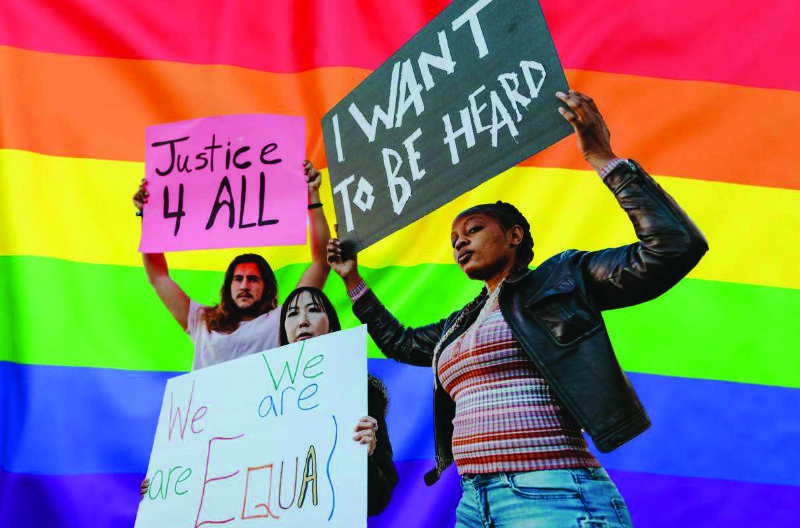
As Pride Month unfolds against a backdrop of growing polarization and civil rights rollbacks, LGBTQ communities are facing both new threats and renewed resistance.
In a media briefing on June 20, hosted by American Community Media, a panel of experts gathered to discuss how deeply PRIDE is rooted within the American community.
Speakers
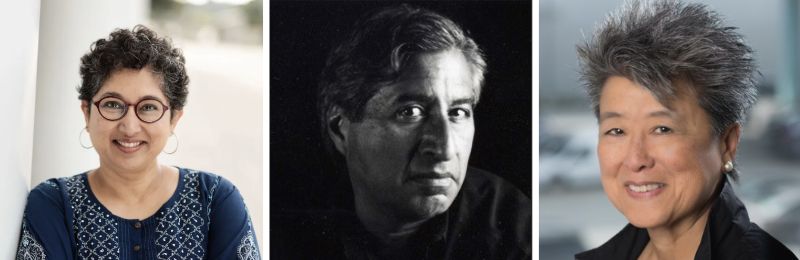
- Aruna Rao, founder and Executive Director of Desi Rainbow
- Richard Rodriguez, award-winning author who came out in his collection of essays ʻDays of Obligation’
- Helen Zia, journalist and activist for Asian American and LGBTQ rights, and founder of the Vincent Chin Institute
In just the past few weeks, the Trump administration halted funding for an LGBTQ youth suicide prevention hotline that had supported over 1.3 million callers since 2022. The Supreme Court upheld Tennessee’s ban on gender-affirming care for transgender minors. And in a small but significant victory, a federal judge blocked a Trump administration order that would have prevented transgender and nonbinary Americans from receiving passports that reflect their gender identity.
Roughly 9 million adults in the U.S. — about 3.8% of the population — identify as lesbian, gay, bisexual, or transgender, according to recent estimates.
“I remember a time when we were completely repressed, hidden, and shoved into a closet, and that did not stop us from coming out,” said Helen Zia. “If you completely pretend that there’s no such thing as queer people, that’s not going to stop it.”
Zia described how even among progressive spaces, LGBTQ identity was once dismissed as a “white issue.” Recalling an incident in her early 20s, she said she was confronted by fellow Asian, Black, and Latino activists who questioned her over whether she was a lesbian, calling homosexuality “a sign of petty bourgeois white self-indulgence.”
“I had never had a girlfriend,” she said. “At that time, things were so invisible and demonized that in my mind, I was going, ‘I don’t know. What does that mean? How do I know I’m a lesbian?’ So I looked at all my fellow activists and said ‘No, I’m not.’”
The moment forced her into silence. “They were like, ‘Oh, good, fine. Next agenda item.’ I was just an agenda item for them … but for me, it was stepping into the closet and slamming the door shut.”
What changed public acceptance over time, Zia said, was the personal: “When people realize that their own family members, people they love, might be LGBTQ … that’s one code that people do understand: If you’re going to insult my family member, you insult all of us.”
Journalist and author Richard Rodriguez, who grew up in a Catholic Mexican immigrant household in Sacramento, said his family was pivotal in his coming out. “My siblings converted my parents,” he said. “My brother, a lawyer in San Francisco, was encouraging my coming out long ago, and my sister … was my date when I wanted somebody to go to plays and musicals with.”
Rodriguez expressed concern over the term “pride.” “I don’t feel that I chose to be gay. I feel that I was chosen to be gay,” he said. “And now, it is an incredibly dangerous time. There’s no doubt in my mind that civil marriage for same-sex couples could be reversed. We saw that with Roe v. Wade.”
He pointed to deportations of LGBTQ asylum seekers, such as gay makeup artist Andry Hernandez Romero, among Venezuelan migrants deported to El Salvador in March. A federal judge recently ordered the administration to return a Guatemalan asylum seeker who had been wrongfully deported to Mexico. “During the AIDS crisis, the activists had a saying: ‘Silence equals death.’ And that’s what’s happening now. We cannot afford to be silent.”
For Aruna Rao, silence was also deeply personal. When her son came out as transgender a decade ago, resources were scarce. “I found myself the only brown face at support meetings … That led me to think: I could not be the only Indian American mother of a queer and trans child. There must be thousands of us.”
Rao shared how her son asked her to keep his identity from his father until he left for college. Eventually, she told her husband. “He told my son: ‘You know I love you. I don’t understand any of this. You can tell me what you want me to do or say, but never doubt that I love you.’ That was a beautiful moment that led our family forward.”
Mental health disparities remain stark. LGBTQ people are more than twice as likely as heterosexuals to have a lifetime mental health disorder, and two and a half times more likely to experience depression, anxiety, or substance misuse.
“None of these mental health issues are caused by being LGBTQ or coming out,” Rao said. “It’s due to the stigma and discrimination that LGBTQ people face.”
She added that immigrant families can feel isolated too. “In our communities, extended family and chosen family are crucial. Their acceptance will make or break a child’s ability to live authentically.”
For LGBTQ Americans and those who love them, Pride remains not just a celebration, but a lifeline — a space to be seen, supported, and unafraid.
All images provided by ACoM.