Mexico – U.S. Relations Set the Tone for Trump Era Diplomacy
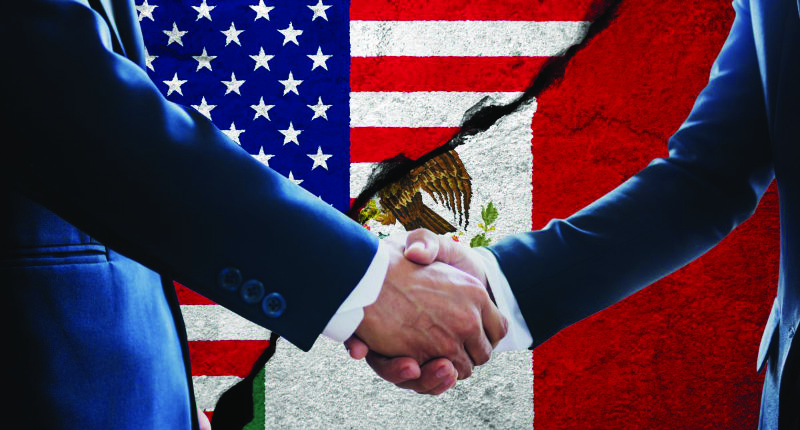
As global alliances shift under the weight of the Trump administration’s aggressive tariff agenda, Mexico has drawn attention for charting a notably effective—and quietly assertive—diplomatic path. Unlike other countries that have either sparred with or capitulated to President Trump’s trade demands, Mexico has steadily protected its national interests through calm negotiation.
In an media briefing on April 25, hosted by American Community Media, a panel of experts highlighted the foreign policy leadership of Mexican President Claudia Sheinbaum, whose measured strategy has secured key tariff exemptions and delays from the U.S.
Speakers
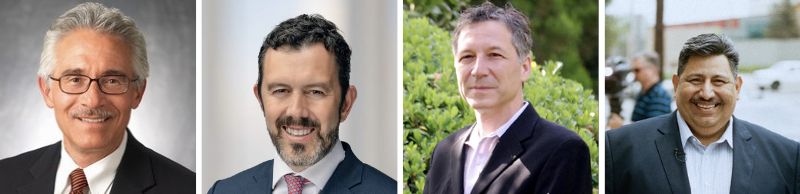
- David Ayón, Senior Fellow, Leavy Center for the Study of L.A., Loyola Marymount University. Twice visiting Research Fellow of the Center for US-Mexican studies
- Larry Rubin, President and Chairman of the Board of Board of American Society of Mexico
- Alberto Diaz-Cayeros, Professor, Freeman Spogli Institute, former Director of the Center for Latin American Studies (CLAS) at Stanford
- Luis Alvarado, Political Analyst based in Los Angeles
Sheinbaum’s approach has notably avoided sharp or emotional responses to U.S. tariff threats. Instead, she has responded with pragmatic, often preemptive action aimed at addressing the concerns raised by the Trump administration before they escalate into economic conflict.
On February 3—just one day before the U.S. was set to impose a 25% tariff on Mexican goods—Sheinbaum took to social media to announce a plan to increase security along Mexico’s northern border. She pledged to deploy 10,000 National Guard troops to combat illegal immigration and fentanyl trafficking, directly responding to Trump’s core demands. The move prompted the U.S. to delay its planned tariffs and reengage in high-level talks.
In a rare gesture of praise, Trump, infamous for his combative diplomatic style, called Sheinbaum a “fantastic person,” underscoring the growing pragmatism in U.S.-Mexico ties, despite their ideological divide. Sheinbaum is a member of MORENA, Mexico’s left-leaning political party.
“President Sheinbaum has responded to U.S. demands with calm pragmatism and patience rather than emotional reactions,” said Larry Rubin. “Recognizing that the two countries are each other’s largest trading partners, she has strategically reinforced this economic interdependence politically.”
Experts also noted that Sheinbaum’s diplomatic finesse has strengthened her domestic political standing, allowing her to advance ambitious reform efforts at home.
With an 88% approval rating in recent polls, Sheinbaum is pushing forward her sweeping Plan Mexico initiative, focused on developing domestic industry and supply chains, encouraging corporate investment, and boosting household consumption. She has also proposed easing regulatory hurdles for businesses to stimulate economic growth.
Alberto Díaz-Cayeros linked the shifting trade dynamics to a broader geopolitical strategy. Referencing Albert Hirschman’s 1945 economic theory on political leverage, he noted: “Trump is increasingly aware that amid an uncertain relationship with China, American capital is flowing into Mexico.”
Indeed, in 2023, Mexico surpassed China as the United States’ top trading partner. Bilateral trade between the two countries reached $840 billion in 2024, far exceeding the $582 billion recorded with China.
Yet as Trump enters the early months of his second term, his domestic support appears to be faltering. A recent New York Times/Siena poll found his overall approval rating at just 42%, with only 43% of Americans approving of his economic policies—traditionally a stronghold for Trump.
“For Mexico, this diplomatic effort is about economic stability, immigration policy, and national pride,” said Luis Alvarado. “For the U.S., it’s about maintaining strong regional alliances without unnecessary friction. Both sides are building a pragmatic and strategic relationship that benefits them mutually.”
Experts anticipate that this stabilization will create more favorable investment conditions—particularly in border regions and sectors operating within Mexico.
“Following NAFTA’s signing in 1994, there was a massive influx of U.S. investment into Mexico,” said Díaz-Cayeros. “Today, Mexico is evolving beyond a maquiladora [assembly-only] economy and becoming competitive in advanced industries like aerospace, high-end manufacturing, and medical devices.”
Rubin added that Mexico’s demographic profile strengthens this trajectory: “Mexico’s median age is about 20 years younger than that of the United States. This youthful labor force is a major asset for both manufacturing and service industries.”
David Ayon suggested that Mexico’s model could serve as a diplomatic template. He recalled how in 2015, then-President Enrique Peña Nieto invited Trump to Mexico amid a firestorm of anti-Mexican rhetoric, using quiet diplomacy to manage tensions.
“Instead of escalating disputes—such as those over tomato tariffs—Mexico is working to reassure Trump through measures like allowing U.S. drone surveillance along the border,” said Ayon. “It’s a de-escalation strategy rooted in long-term thinking.”
All images provided by American Community Media