Let’s Invest… in our Parks – The Future of Urban Parks in the US
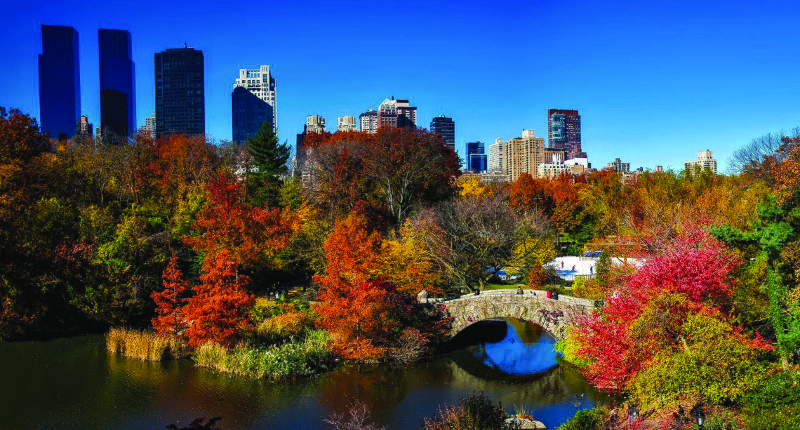
As some U.S. cities pour record-high investments into green spaces, the future of public parks remains precarious in others — exposing a growing divide in access to one of America’s most unifying civic resources.
Despite their clear benefits to physical, mental, and social health, roughly one in three people in the U.S. — more than 100 million, including 28 million children — still live without a park within a 10-minute walk of their home.
In a media briefing on May 23, hosted by American Community Media, a panel of experts discussed the how we can bring a stronger network of urban parks around the country.
Speakers

- Will Klein, Director of Parks Research, Trust for Public Land
- Guillermo Rodriguez, California State Director and VP-Pacific Region, Trust for Public Land
- Justin Cutler, Commissioner of Parks & Recreation, City of Atlanta
- Yvette Lopez-Ledesma, Greening America’s Cities Fellow, Community Partners
A new report and national survey from the Trust for Public Land (TPL) highlights parks as “The Great Unifiers,” valued across political, demographic, and economic lines.
The ParkScore Index
TPL’s 2025 ParkScore Index, released annually since 2012, ranks park systems in the nation’s 100 most populous cities based on five user-centered factors: acreage, amenities, investment, equity, and access — defined as the share of residents with a park within a 10-minute walk.
For the fifth year in a row, Washington, D.C. claimed the top spot, narrowly edging out Irvine, CA; Minneapolis; Cincinnati; and St. Paul, MN.
“Thanks to National Park Service lands that were designed when the city was first developed hundreds of years ago,” said Will Klein.
Nearly 21.5% of Washington’s land is devoted to parks, with 99% of residents living within a short walk of its 699 green spaces.
A Point of Unity in a Divided Nation
For the first time, TPL’s 2025 report includes a national survey of 4,000 demographically and politically diverse park users in major U.S. cities.
Its findings: Parks may be among the least polarized spaces in America today.
Two-thirds of respondents — including 66% of Biden voters and 67% of Trump voters — said they had struck up a conversation with a stranger at a park, often with someone of a different social or economic background. Nearly 80% said they had a park they felt safe in and visited regularly.
“Residents, regardless of political affiliation or any other lines of difference throughout the United States, value public parks and use them frequently, suggesting that parks are among the least polarized spaces in this country right now,” said Klein.
When asked where they wished they had spent more time last year to feel joy, the top answer was clear: “Anywhere outside.”
Since the index’s launch, the share of big-city residents with walkable access to parks has increased from 68% to 76%.
“That’s millions of people who now have a park within walking distance that didn’t nearly 15 years ago,” said Klein, crediting the progress to opening up public schoolyards after hours and on weekends — a growing trend in cities like Atlanta.
Atlanta’s Schoolyards Revolutionize Access
In just 18 months, Atlanta has emerged as a national model by turning school playgrounds into shared public spaces.
Through a coalition called the Atlanta Public Schoolyards Project, the city teamed up with public schools, nonprofits, and TPL to open schoolyards after hours — while granting schools access to city-run pools, golf courses, and recreation centers for students.
The results have been transformative. The initiative:
- Raised Atlanta’s walkable park access rate from 79% in 2024 to over 82% in 2025
- Improved its ParkScore ranking from 25 to 21 — up from 51 in 2016
- Saved the public school district more than $500,000 in potential use fees
“This has unlocked additional funding, including grants and nonprofit dollars, because now people across the country see that we have the resources to maintain our parks at a higher level,” said Justin Cutler.
One in every five dollars Atlanta spends on parks comes from a local nonprofit.
Some residents initially worried about crime and vandalism. But Cutler says the opposite happened.
“By creating more activity after school, you have more eyes in the park, and you’re improving safety. You’re bringing more awareness to what’s happening in space.” he explained. “You’re creating more identity and more social cohesion. People don’t want to vandalize the space, because they have a sense of ownership.”
Los Angeles Falls Behind
While overall U.S. investment in urban parks is at an all-time high — even after adjusting for inflation — just 5% comes from federal sources. And at the local level, some major cities are losing ground.
Los Angeles, for example, dropped to 90th out of 100 cities in this year’s ParkScore, down from 88 last year.
Despite having 559 park sites and 92 miles of trails, 38% of Angelenos — nearly 1.5 million people — still lack access to a park within a 10-minute walk.
The problem is planning, funding, and equity noted Guillermo Rodriguez. The last time LA updated its Park Master Plan was over five decades ago.
Once above the national average for park funding, LA has now fallen significantly behind as investments stagnate. Meanwhile, systemic inequities persist:
- Low-income neighborhoods have 73% less park space than high-income ones
- Communities of color have 66% less than predominantly white areas
Turning the Tide: LA’s New Park Needs Assessment
There is hope for change.
In February, LA launched a landmark Park Needs Assessment (PNA) initiative to gather citywide data — including heat islands, tree canopy, pollution, housing burden, unemployment, safety, and more — to guide future investment.
The draft PNA will be published online by September, with the final version expected by year’s end.
Rodriguez said two major goals are:
- Opening the LA River for public recreation
- Forging a joint use agreement between the City Council and the LA Unified School District — the nation’s second-largest — to open schoolyards, similar to Atlanta’s success
“A park isn’t just for recreation. They’re lifelines,” said Yvette Lopez-Ledesma.
When the wildfires happened, parks became aid distribution centers. They host food banks, offer childcare, and serve as hubs for essential services.
Her takeaway: “An investment in parks is an investment in quality of life.”
All images provided by ACoM.