Garba and Cricket – A South Asian Gen-Z’s Take on Culture
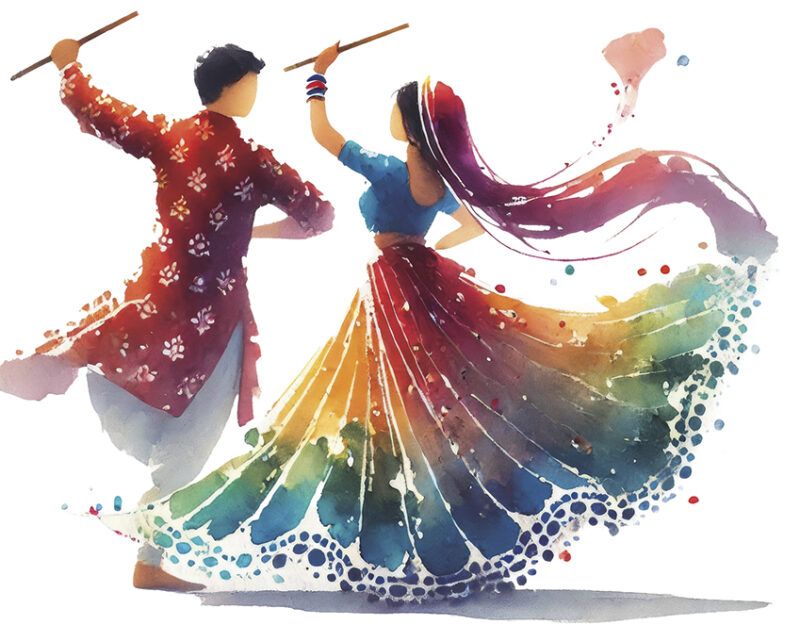
In a world of endless scrolling and constant hustle, culture can easily slip into the background. But for Gen-Z South Asians navigating between tradition and modernity, moments like Garba and cricket matches become powerful reminders of identity and connection. Khushi Mehta reflects on her connection to her cultural roots.
Our generation moves fast. We scroll endlessly, juggle school, side projects, and passions, and live in a world that never seems to slow down. We value independence, creativity, and connection, sometimes all at once. And in the middle of that chaos, it’s easy for culture to slip into the background.
Yet now and then, something reminds us to pause, to celebrate who we are, and to feel part of something bigger. For me, that came during Navaratri, when I went to Garba this year. Even in a world that’s always moving, moments like these make culture feel alive, not just as a tradition but as a part of us that travels wherever we go.
Being Indian today feels different than how it did for previous generations. We’re constantly online, juggling school, projects, and passions, which sometimes pushes culture to the background. And yet, for me, it’s exactly what keeps me grounded.
Culture isn’t just rituals or festivals; it’s reminders of who I am, where I come from, and what connects me to others. At Garba this year, the dhol beats, the claps, and the circles of dancers weren’t just about tradition, but they were about connection. Everyone moved differently, yet together, creating something bigger than any single person. That’s how I think about culture, alive, personal, and something you carry with you.
I weave it into my everyday life in small ways, listening to Bollywood music while working, sharing the rhythms of Garba with friends, or celebrating little traditions with family and friends. It doesn’t just end at the festivals; the recent India-Pakistan cricket match reminded me how culture shows up anywhere. For one day, Indians around the world were connected, families crowded around TVs, fans streaming on their phones, stadiums buzzing with energy. It was more than just a game. A shared excitement and a shared heartbeat that made the world feel smaller in the best way.
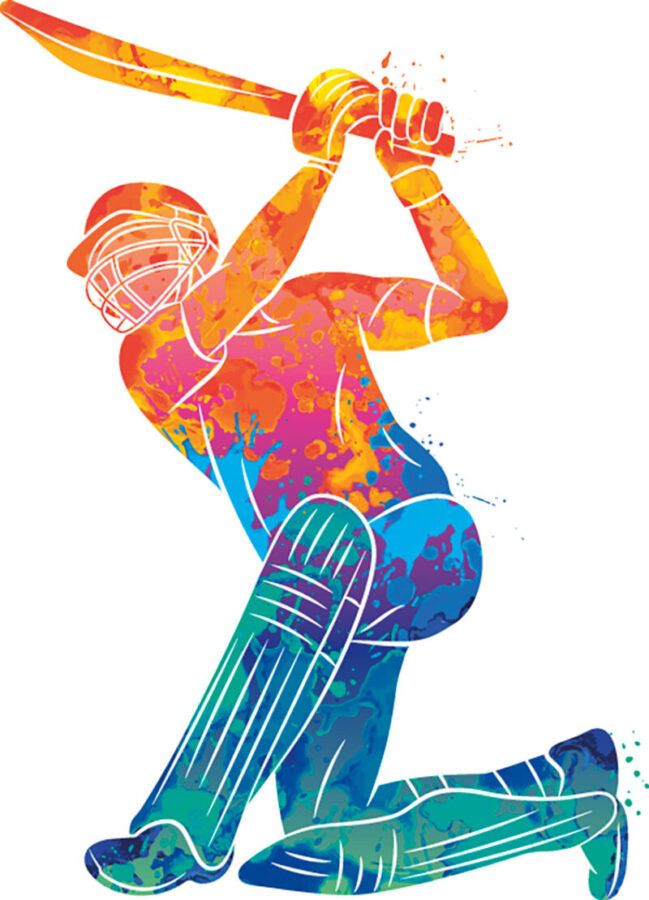
Culture isn’t just something we step into during festivals or a cricket match. It’s a part of us, quietly moving with us through our everyday lives.
That’s what makes our generation unique. We can be Indian and American, traditional and modern, rooted and global, all at once. The lessons our parents and our culture have taught us, about family, respect, perseverance, and celebrating life don’t just disappear as we grow up. They stay with us, quietly shaping the way we think, the choices we make, and the way we connect with others. I think it’s on us to keep those lessons alive, to celebrate the festivals, to tell the stories, and to share the songs and rituals, because that is how we honor where we come from.
Being South Asian means being part of a world that’s vast and diverse, bursting with colors, languages, traditions, and a history that stretches back thousands of years. That richness isn’t just something we inherit, but something we get to carry forward and make ours. We have the opportunity to create a bridge from the past to the future. We get to live the culture, not just remember it, and that’s a responsibility and a privilege that I hope our generation never forgets.
So, in the end, culture isn’t just something we step into during festivals or a cricket match. It’s a part of us, quietly moving with us through our everyday lives. I find it in my cursive handwriting, in the roots of my curly hair, in the small accent that slips out when I talk, and maybe you’re starting to notice it too, in little parts of your life.
All images: Adobe Stock.