California Takes on Loneliness as a Public Health Crisis
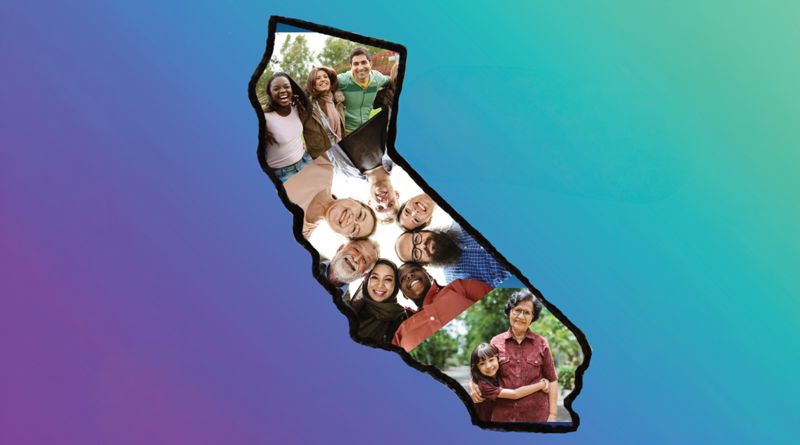
Loneliness and social isolation are increasingly being treated as more than private struggles. Across California, declining social connection is affecting children, caregivers, older adults and families, with consequences that can extend into physical health, mental health and longevity.
State leaders are now trying to strengthen what experts call “social infrastructure” — the parks, libraries, schools, community centers, family networks and other places and relationships that allow people to feel connected and supported. The challenge is not simply getting people into the same room, but creating communities where they feel they belong.
In a media briefing on November 10 hosted by American Community Media, a panel of experts discussed California Love, California Strong, a statewide initiative designed to strengthen social connection and counter loneliness and isolation.
The initiative, launched through the First Partner’s Office and GO-SERVE, seeks to build a longer-term framework for social health across California. Experts emphasized that connection must be understood across the lifespan — from children and young adults to family caregivers and older Californians — and that public policy can either strengthen or weaken the relationships and spaces people depend on.
Speakers:
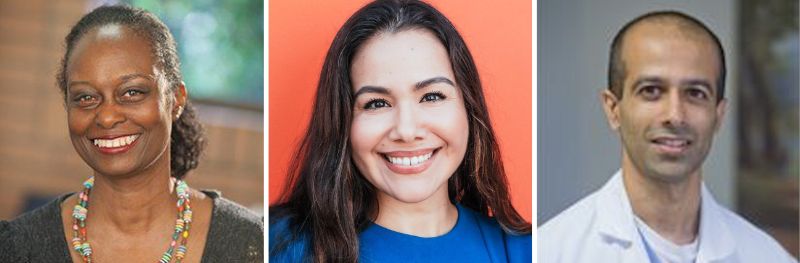
- Dr. Donna Benton, Director, USC Family Caregiver Support Center and the Los Angeles Caregiver Resource Center
- Mayra Alvarez, President, The Children’s Partnership
- Sohil Sud, MD MA, Associate Clinical Professor of Pediatrics in the Division of Pediatric Hospital Medicine at the University of California, San Francisco
Loneliness is a health issue
Sohil Sud said California is confronting significant levels of social disconnection.
Citing 2026 data, he said roughly one in eight Californians experiences loneliness usually or always, while 13% report lacking purpose or direction in life. About 43% of adults report having fewer than three close relationships, and roughly one-third say they do not feel that they belong in their local communities.
Participation in civic and community life is also limited.
Sud said about 60% of Californians reported no participation in clubs, organizations or community groups during the previous year. A similar share said they had not formally volunteered or participated in informal neighborhood service.
“This is not the type of society I wanna live in,” Sud said. “It’s not the type of society I want my kids to grow up in.”
For physicians, the issue goes beyond emotional well-being.
“Social connections are not just nice to have,” he said. “They actually matter deeply to our health.”
Sud said social disconnection is associated with higher risks of heart disease, type 2 diabetes, depression, anxiety, suicidal ideation and dementia. He also pointed to research suggesting that chronic disconnection affects stress hormones and inflammation in the body.
The distinction between loneliness and isolation is important, he added.
“Isolation is objective,” Sud said. “It’s that state of having measurably few relationships, minimal social interaction, maybe living alone, not getting out.”
Loneliness is different.
“Loneliness is subjective,” he said. “It’s that distressing feeling whether you’re isolated or even if you are getting out that you’re not getting what you need.”
That means the solutions differ. Reducing isolation may involve helping people physically connect with others. Addressing loneliness requires making those relationships meaningful.
Building social infrastructure
Sud introduced another concept: social infrastructure.
By that, he meant the policies, services, resources and physical spaces that allow people to participate in community and civic life.
Libraries, parks, senior centers and other gathering spaces can serve that purpose, but only when people can actually access them.
Survey respondents identified time and effort as leading barriers to socializing. Sud said 28% also pointed to access or proximity as obstacles.
California is attempting to address those barriers through investments in community organizations and tribal entities.
Sud said the California Department of Public Health recently completed an application cycle for $30 million in grants aimed at culturally grounded, community-driven approaches to strengthening connection, supporting well-being and preventing mental health and substance-use problems.
The state has also created its first Social Health Council, bringing together leaders from government, academia, tribal communities, faith organizations and community groups.
The goal is to develop longer-term recommendations for strengthening connection and belonging.
“Social health is health,” Sud said. “It’s a public health imperative.”
Children are asking for connection
Mayra Alvarez said loneliness should not be viewed primarily as a problem of old age.
Young Californians are experiencing it as well.
“In a statewide survey released earlier this year, over the summer, more than half of California teens said they felt lonely in the past month,” Alvarez said.
At the same time, nearly nine in 10 said seeing friends in person mattered to them.
“Young people are telling us that they’re not giving up on connection,” she said. “They’re actually asking for it.”
For children and adolescents, belonging can affect whether they seek help, attend school and recover from stressful experiences.
“A child who feels like they belong is a child who’s more likely to ask for help, to show up to school, and to heal,” Alvarez said.
She also stressed that loneliness is shaped by policy.
When families are afraid to visit parks, libraries, schools or clinics, she said, children lose places where social connection normally develops.
“Fear is isolating,” Alvarez said.
She pointed particularly to immigrant families, LGBTQ youth, Black youth, children in foster care and rural communities as populations that may face additional barriers to connection.
Peer support can make a difference
Alvarez highlighted youth-to-youth support as one promising approach.
Through a peer-to-peer youth mental health high school pilot, 936 students received peer support during the first year and 140 students were trained as peer mentors.
According to Alvarez, 96% of participants said they felt better afterward and 88% reported feeling more comfortable opening up to another young person.
“Sometimes the most powerful intervention for a lonely teenager is another teenager who says, ‘Me too,’” she said.
Schools can also create spaces where students feel seen and supported, including wellness centers and restorative alternatives to suspension.
Culture and family can serve as protective factors as well.
Alvarez pointed to familismo in Latino communities, faith communities, language, ceremony and cultural traditions as examples of ways families create belonging and resilience.
“Connection, it’s not a one-size-fits-all model,” she said.
That makes culturally specific community organizations an important part of the response.
Places to belong matter
Alvarez repeatedly returned to the importance of physical spaces.
Libraries, parks, youth centers, childcare centers and school wellness spaces can all function as social infrastructure.
“Our young people are telling us that they want those free safe places to be together,” she said.
At a time when families are struggling with affordability, she argued that childcare facilities should also be considered part of that infrastructure.
But she cautioned that campaigns promoting connection cannot substitute for the safety net.
“Connection campaigns, they’re not gonna make up for lost health coverage, food assistance or safety,” Alvarez said. “This is a both and.”
Belonging, she said, is ultimately strengthened not only by community programs but by policies that make families feel secure enough to participate in public life.
Caregiving can be deeply isolating
Donna Benton said family caregivers provide another example of how loneliness and social isolation can develop even when a person is rarely alone.
A caregiver may spend most of the day with another person but still feel disconnected from friends, hobbies and community life.
“Family caregivers often report that being a caregiver expands their patience, it expands new levels of resiliency, but it also tends to shrink their world,” Benton said.
Everyday activities can require extensive planning.
Going to a grocery store, visiting friends, seeing a movie or spending time at a park may become difficult when a caregiver cannot easily leave the person they support.
Caregivers may also work regular jobs before returning home to what Benton described as another part-time job.
“On average family caregivers are spending another 20 hours a week,” she said.
Over time, that can reduce opportunities for spontaneous social connection.
Older adults face shrinking networks
Older adults can experience social isolation for different reasons.
Health changes, reduced mobility and the deaths or illnesses of friends can gradually shrink social networks.
Ageism adds another barrier.
Benton said older adults can find themselves treated as though they no longer have something meaningful to contribute.
“They may not spontaneously talk to you because they’ll say, ‘Oh, if I start a conversation with this person, they’re going to talk forever,’” she said.
Even older adults living in multigenerational households can experience loneliness.
A person may be surrounded by relatives but still feel excluded from conversations, decisions or activities.
Benton said roughly one-quarter of older adults and family caregivers experience social isolation and loneliness.
That issue will become increasingly significant as California’s population ages.
By 2030, she said, the state is expected to have about 10 million older adults.
Designing communities for connection
Benton argued that California should think about connection through the concept of universal design.
An age-friendly community is not simply one designed for older people. It creates infrastructure that works better for everyone.
She pointed to curb cuts as an example.
Originally associated primarily with disability access, curb cuts now benefit parents pushing strollers, travelers pulling luggage, people using walkers and many others.
The same principle can apply to community spaces.
“We need to have very welcoming, universally designed, age-friendly gathering places,” Benton said.
That includes accessible transportation, intergenerational activities and opportunities for volunteering.
Connection, she said, should not depend entirely on an individual finding a way to overcome barriers alone.
“Connection is something communities can make easier,” Benton said.
Preparing for future crises
The COVID-19 pandemic demonstrated how quickly normal sources of connection can disappear.
Asked what would happen during another pandemic, the speakers emphasized that public health protections and social connection should not be viewed as competing goals.
Sud said future responses should incorporate lessons from COVID-19 by using tools such as masks, vaccines and improved indoor air quality to reduce disease transmission while preserving social interaction whenever possible.
Alvarez said technology can also help maintain relationships when in-person gathering is limited, although it does not fully replace physical connection.
Outdoor spaces proved especially valuable during the pandemic, she added.
Benton recalled families finding creative ways to connect with relatives in long-term care facilities, including celebrations held outside windows and makeshift “hug stations.”
The larger lesson is that social health requires intentional investment before a crisis arrives.
California Love, California Strong reflects that shift in thinking: loneliness is not simply a private feeling that individuals must solve on their own. It is connected to the design of communities, access to public spaces, family and caregiving policies, cultural inclusion and whether people feel safe enough to participate in everyday life.
As Sud put it, the goal is not merely getting people together.
It is creating relationships that are “high quality and meaningful and purpose-driven.”
All images courtesy of American Community Media