Affordability, Immigration and Civil Rights Shape Voter Concerns Across Communities
As voters head into the Nov. 3 midterms, journalists covering communities across the country are hearing strikingly similar concerns despite wide differences in geography, race and immigration history. The price of food, housing, healthcare and utilities is placing pressure on household budgets, while immigration enforcement and concerns over civil rights have added uncertainty for many immigrant and minority communities.
Those pressures are playing out differently from Silicon Valley to rural Idaho, Los Angeles, New York, Mississippi and Michigan. Together, they offer a ground-level view of what is motivating — or discouraging — voters as ballots are cast.
In a media briefing on October 30 hosted by American Community Media, a panel of ethnic media journalists discussed what they are hearing from their audiences ahead of the midterm elections, including concerns about affordability, immigration enforcement, voting rights, healthcare and political representation.
Although each journalist described a different electorate, several themes repeatedly emerged. Economic insecurity remains dominant, but voters are also weighing questions about whether government institutions protect their communities, whether immigration policies threaten their families and whether political participation can meaningfully address the pressures they face.
Speakers:
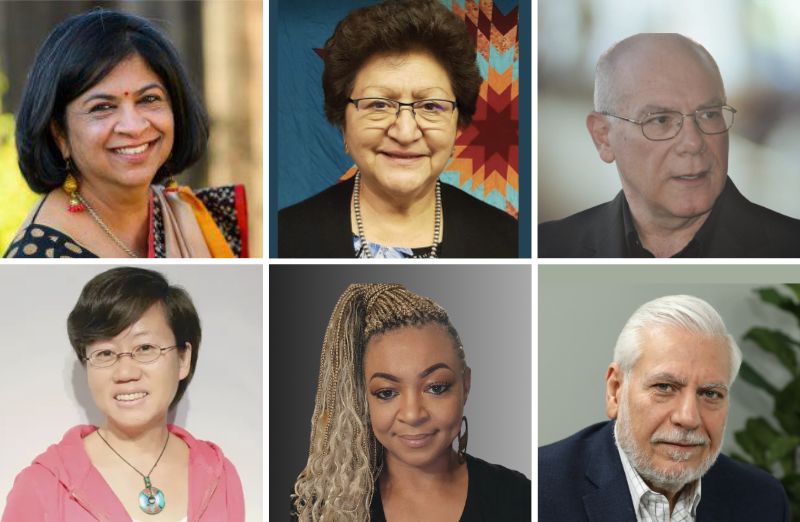
• Vandana Kumar, Publisher and CEO, India Currents
• Lori Ann Edmo, Editor, Sho-Ban News
• Nestor Fantini, Co-Editor, Hispanic LA
• Rong Xiaoqing, Reporter, Sing Tao NY
• Edelia Carthan, Contributing Writer, Mississippi Link
• Osama Siblani, Publisher, Arab American News
Affordability cuts across communities
Despite profound differences among the communities represented, journalists repeatedly returned to the cost of everyday life.
For Latino voters in California, Nestor Fantini said the pressure is immediate.
“Affordability is the central complaint that they have,” Fantini said, “and they know that that’s connected with Washington more than with the mayor.”
Research released by UCLA shortly before the discussion reinforced that concern. Latino registered voters in California reported significantly more financial strain than non-Latino voters, with 23% saying they were struggling to pay for basic necessities compared with 12% of non-Latino voters. A separate UCLA analysis found Latino voters were also more likely to worry about housing and electricity costs.
For some households, that means changing what they buy.
UCLA found Latino registered voters were more likely than non-Latino voters to report cutting spending or otherwise adjusting household finances in response to rising costs.
The pressure extends to utilities, particularly after periods of extreme heat.
Fantini said some Los Angeles households have seen electricity bills increase dramatically, placing another strain on families already confronting higher food and housing costs.
“The consequence is anxiety,” he said. “Anxiety on two fronts: the wallet and ‘la migra.’”
Silicon Valley prosperity does not eliminate economic anxiety
Vandana Kumar said similar concerns exist among Indian Americans in Silicon Valley, despite the region’s reputation for wealth and opportunity.
Silicon Valley is “often presented as a place of limitless opportunities,” Kumar said, but expensive housing, childcare and education costs place substantial pressure on families.
Technology-sector instability has added another dimension.
For workers on H-1B visas, losing a job can have consequences far beyond income.
“A job loss isn’t just a financial setback,” Kumar said. “It can put their immigration status, their family’s future in the United States at risk.”
Many Indian American households are also balancing financial responsibilities across generations, including caring for aging parents while raising children in one of the nation’s most expensive regions.
The concerns reflect broader AAPI polling.
AAPI Data’s 2026 voter survey found that 90% of Asian American registered voters identified cost of living and inflation as very or extremely important to their vote. The survey also found 90% of registered AAPI voters planned to participate in the midterms.
Economic pressures hit harder where resources are scarce
In Mississippi, Edelia Carthan described an electorate facing similar price increases but with considerably less financial cushion.
“Gas is $4 here in Mississippi,” Carthan said. “I remember when gas was 99 cents.”
Food prices are another concern in a state where many communities already face limited access to grocery stores.
“Mississippi is already a food desert, and to have grocery prices as high as they are is a real concern,” she said.
Healthcare affordability adds another layer.
Mississippi remains among the states that have not adopted the Affordable Care Act’s Medicaid expansion, leaving many lower-income adults without the coverage available in expansion states.
Osama Siblani said healthcare costs are also weighing on households in Michigan, including people who already have Medicare.
“I still pay $1,000 a month for me and my wife,” he said.
Taken together, the accounts illustrate an affordability problem that extends across income brackets and communities, even if its severity differs substantially.
Immigration enforcement reaches beyond those directly targeted
Economic anxiety often intersects with immigration fears.
Rong Xiaoqing said Chinese neighborhoods in New York have experienced changes in everyday behavior as residents worry about enforcement.
“In Sunset Park or Flushing, these Chinese-concentrated areas, a lot of restaurants don’t have as many customers anymore, and the long-distance buses don’t have as many passengers anymore because people stopped traveling,” she said.
For a community with a large foreign-born population, immigration policy can affect not only undocumented people but permanent residents, naturalized citizens and relatives with different immigration statuses.
The same dynamic is visible among Latino communities.
Fantini said anxiety surrounding immigration enforcement has become part of daily life for some families and has compounded existing concerns about household finances.
“People are appalled by the level of brutality and cruelty of this administration’s federal agents,” Fantini said, describing what he is hearing from his audience.
Kumar said immigration uncertainty also affects Indian Americans differently depending on their status.
Some naturalized citizens are responding by participating politically, she said, while people on temporary visas or waiting for green cards may be reluctant to speak publicly or draw attention to themselves.
Arab and Muslim voters confront hostility
In Michigan, Siblani described a political atmosphere in which Arab American and Muslim residents feel subjected to unusually intense hostility.
He pointed to attacks surrounding Democratic U.S. Senate candidate Abdul El-Sayed as well as rhetoric aimed more broadly at Arab and Muslim communities.
“On Sept. 11, 2001, we were not subjected to this kind of hate,” Siblani said. “And it is coming at us from the highest level.”
He said residents are being targeted “because of our religion, because of the way we pray, because of what our names sound like.”
Civil rights organizations have reported elevated complaint levels. The Council on American-Islamic Relations said it received 8,683 complaints nationwide in 2025, the highest annual total since it began publishing its civil rights reports covering 1996.
For affected voters, the election is therefore not only a referendum on economic policy but also a vehicle for responding to concerns about discrimination, religious freedom and civil rights.
Native communities focus on sovereignty and federal obligations
Lori Ann Edmo said voters in the Shoshone-Bannock Tribes of Idaho view federal policy through a different political and historical framework.
“We have a unique relationship with the federal government, and they have a trust responsibility,” Edmo said.
That relationship derives from treaties and federal obligations to tribal nations.
“They have an obligation to provide funding for a lot of our programs for our people,” she said, “and it’s because of all the lands that were taken from us.”
Current concerns include federal funding, natural resources, census data and public lands.
Tribal advocates have raised alarm about federal proposals involving changes to demographic questions in the 2030 Census. For Native communities, census data can affect federal allocations and programs ranging from housing to infrastructure.
Edmo also pointed to debates over federal lands.
Under treaty rights, she said, tribal members retain the ability to hunt and fish on certain unoccupied lands.
“We’re constantly having to fight to protect our natural resources,” she said.
Those concerns make political participation inseparable from questions of sovereignty and treaty rights.
Voting rights remain central in Mississippi
Carthan connected current political participation in Mississippi to the state’s civil rights history.
Mississippi has the highest Black population share of any state, yet Black candidates have faced longstanding barriers to winning statewide office.
Carthan, a cousin of Emmett Till, described that history as directly relevant to contemporary elections.
“That’s not by accident,” she said. “It has been politically manufactured.”
Her comments reflected a larger concern about whether Black political participation translates into representation and policy influence.
For many voters she encounters, Carthan said, the pressures of everyday life — groceries, gasoline, healthcare and political rights — are converging rather than operating as separate issues.
“These daily pressures,” she said, “are pushing citizens to the polls on Nov. 3.”
Different communities, overlapping pressures
The journalists’ accounts did not describe a single unified electorate.
Indian Americans in Silicon Valley face different conditions than Black voters in Mississippi, tribal members in Idaho or Arab Americans in Michigan. Immigration status, income, geography and political history all shape how voters experience the same national policies.
But the overlap was difficult to miss.
Housing and food costs affect nearly every community. Healthcare expenses are reaching both insured and uninsured households. Immigration enforcement affects businesses and families far beyond people directly placed in removal proceedings. Civil rights concerns influence communities whose histories with government differ substantially.
The result is an electorate approaching Nov. 3 with a combination of material and institutional concerns.
For some voters, the central question is whether their paycheck covers their household expenses. For others, it is whether their immigration status remains secure, whether their community’s treaty or civil rights will be protected or whether elected officials understand their experiences.
The journalists closest to those communities described voters less as members of demographic blocs than as people responding to the accumulated pressures of daily life.
That may be the clearest common thread heading into Election Day: the issues driving participation are rarely abstract. They are appearing in grocery aisles, utility bills, workplaces, healthcare offices, immigration encounters and communities deciding whether political participation can change what happens next.
All images courtesy of American Community Media