From Affordable to Bourgeois: Hayward’s Housing Shift
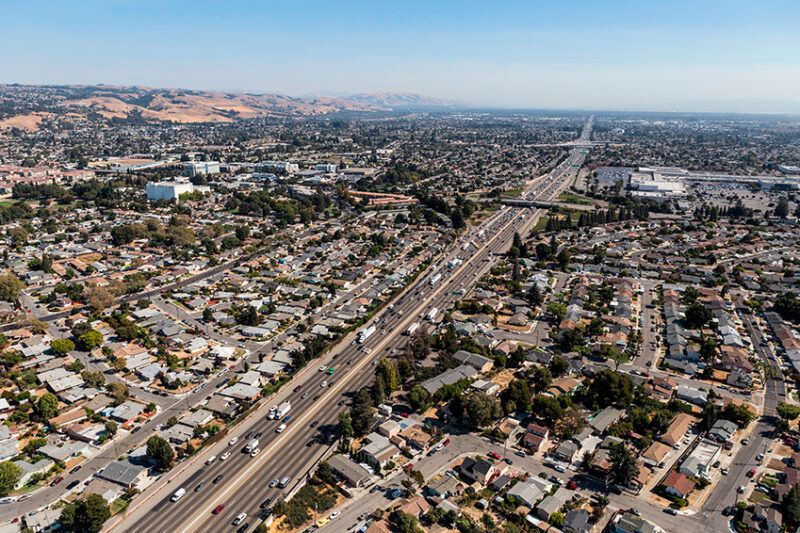
Hayward, for long a haven for Bay Area families seeking affordable housing, is now caught in the same affordability trap that drove residents from San Francisco. At a recent media briefing, housing experts revealed how income disparity, aging homeowners, and insufficient resources are pushing families out of the heart of the Bay and what it will take to help them stay.
For decades, Hayward represented the American dream within reach. Families priced out of San Francisco and other expensive Bay Area cities found a community where homeownership remained possible. Today, that refuge is disappearing.
At a media briefing held Tuesday, Oct. 14, at Hayward’s downtown library, housing experts and community advocates delivered sobering news: the city that once offered escape from high housing costs now faces its own crisis, with long-time residents struggling to stay and newcomers unable to enter the market.
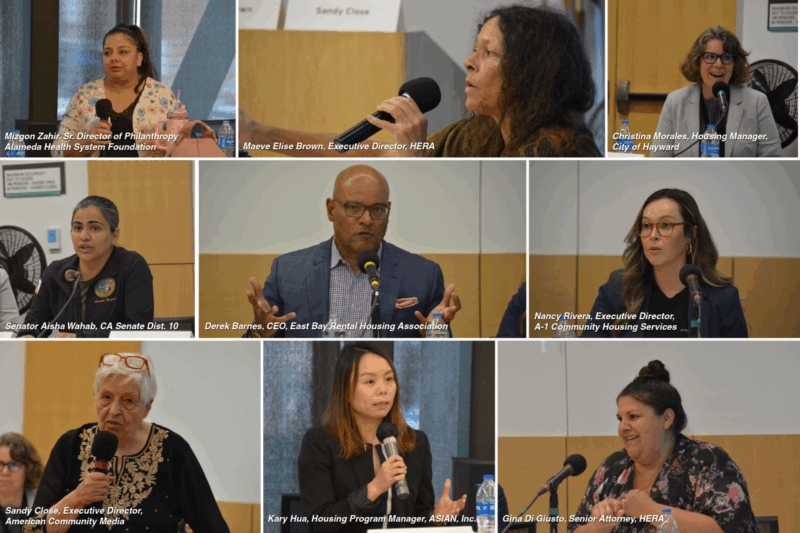
“Housing has now moved way up the must pay more attention and do more coverage of on the agenda,” said Sandy Close, Executive Director of American Community Media. The event convened journalists and housing experts to examine how communities like Hayward are losing their economic diversity.
“During the Great Recession, my family lost their home in a foreclosure, and so this issue of the housing crisis is personal for me,” said State Senator Aisha Wahab, who represents California’s 10th district, including Hayward. “Nearly 15 years later, I’m still a renter, and that’s the story of millions of Americans.”
When Six Figures Means Low Income
In five Bay Area counties, state officials classify $100,000 annual salaries as “low-income”—a threshold that puts homeownership beyond reach for most families. The crisis extends statewide: California has seen a 20% surge in foreclosures over the past year, with initial default notices, the first step toward losing a home, up 44%.
“This pattern looks very much to me like what we saw in the lead-up to the great 2008 foreclosure crisis,” said Maeve Brown, Executive Director of Housing and Economic Rights Advocates (HERA). The scale of borrowing has grown dramatically since 2008, when mortgage debt stood at $9 trillion. Today, that debt amount stands at $13 trillion!
Christina Morales, Hayward’s housing division Manager, laid out her city’s demographics. Nearly half of Hayward homeowners earn below the area’s median income; among renters, the proportion climbs to 70%. “Yet 46% of tenants are cost-burdened,” she said. “They’re just trying to make rent.”
Small Landlords at their Breaking Point
Derek Barnes, CEO of the East Bay Rental Housing Association, spotlighted an overlooked crisis: small property owners who provide much of the region’s affordable housing are themselves at risk.
More than half of the association members are small landlords with four units or fewer, and the majority have reached retirement age. Barnes reported that 54% of owner-operators over 60 face potential loss of their properties. A recent survey delivered more troubling news: 34% of smaller owner-operators plan to exit the rental business within two years. A trend that could eliminate thousands of affordable units.
“When we start to connect the dots between the loss of our smaller owner operators and how that impacts homelessness, we really need to be mindful,” Barnes said.
Senator Wahab highlighted a transparency problem. “There is actually no true legal definition at the state level” for small mom-and-pop landlords, she noted. “Every single effort at the state level has been killed by special interest groups.” She drew a sharp distinction between lifetime property owners with a few units and corporate landlords whose portfolios can shift entire markets.
The New Math of Homeownership
Nancy Rivera, Executive Director of A-1 Community Housing Services in Hayward, described today’s nearly impossible equation. “For many of our clients, the dream of owning a home means pooling resources across multiple households just to qualify for a mortgage,” she said. With monthly payments reaching $5,000 to $6,000, “unless two families, three families are coming together, it’s really, really tough.”
Rivera traces a migration pattern in reverse. “Many years back, my family and friends couldn’t afford to live in San Francisco, so they moved to Hayward. Once, Hayward was that affordable place. Now we’re seeing families moving to Modesto, to Stockton, moving out of state.”
For immigrant communities, this hits especially hard. Kary Hua, Housing Program Manager at ASIAN Inc., described the multigenerational strategies families now employ. “We’re seeing a lot of families where it’s, ‘Am I buying with my daughter? Am I buying with my brother?’ in order to stay in the Bay Area.”
Mizgon Zahir, a second-generation Afghan homeowner, lives this reality. “We have his adult children who live with us and contribute to the household,” she said of her merged family. “We’re constantly under pressure: If my health fails or one of us loses work, what will happen? We have one college graduate from Berkeley who cannot afford to rent.”
Sandy Close captured the knowledge gap many face: “One of the things you said to me is how few of us who actually are able to buy a home know what we’re getting into. We know very little about what kind of world being a homeowner means.”
Seniors Squeezed Out
Perhaps no group faces steeper challenges than seniors. A newly completed affordable housing complex in Hayward rejected 41% of senior applicants because their incomes fell too low.
“Affordable rents have become unaffordable,” Morales explained. “Even renting is no longer an opportunity for many seniors.”
Brown framed the compounding challenge: “The home is aging along with our bodies. The home needs care, and you need to be able to pay for repairs. Where does that money come from when you’re barely holding on?”
Following the Money
Morales identified what she sees as the core problem. “When I back up, I look at it as an income problem,” she said. “The cost of everything has gone up so much, but our incomes over the course of time have not gone up proportionately.”
The metrics themselves worsen inequality. “The median income increases faster at that higher income level than it does at the lower income level,” Morales explained. As high earners, particularly in tech, drive up median incomes, “affordable” housing becomes less affordable, priced by a metric that reflects prosperity at the top rather than struggle at the bottom.
“I’m wondering to what extent is it really an income disparity issue?” Close reflected. The Bay Area leads the nation in both income inequality and housing crisis, a connection few see as coincidence.
Finding Help in the Crisis
Despite these challenges, advocates emphasized available resources. HERA provides free legal services for mortgage problems, HOA disputes, and estate planning. Housing counseling organizations like A-1 Community Housing Services and ASIAN Inc. offer homebuyer education, foreclosure prevention, and post-purchase workshops, including access to grants up to $20,000 through California’s Keep Your Home California program.
Senator Wahab outlined her legislative efforts: $300 million for down-payment assistance, $500 million for homelessness prevention, and $1.4 billion for affordable housing in this year’s budget. She’s advancing what would be the nation’s first social housing bill to create 1.4 million affordable units statewide.
Yet she cautions against faith in supply alone. “In 2023 we developed a little over 100,000 units in the entire state. We’re 2.5 million units in need for our actual population,” she said. “But here in Alameda County, the average cost of a home is $1.4 million.”
The path forward requires more than building: it demands addressing income disparity, supporting small property owners, and creating housing genuinely affordable to those who need it.
Featured Photo: Adobe Stock