California Connects as Nation Disconnects

As political divisions deepen nationwide, California brings residents together through community service and civic engagement. The state kicked off the first of eight regional “California Connects” convenings in San Francisco, offering a blueprint for how government, nonprofits, and community organizations can collaborate to address local challenges.
Amid growing national division, California is encouraging residents to build stronger ties in their own communities. On Wednesday, Oct. 8, the Governor’s Office of Community Partnerships and Strategic Communications hosted the first of eight “California Connects” convenings at the Hyatt Regency in San Francisco. About 250 representatives from 100 local community organizations, nonprofits, and government agencies attended, all seeking ways to strengthen local connections.
The convenings are part of the state’s GO-Serve program, launched last year to promote paid service and volunteerism to address pressing local issues, from climate change and health care to elder support and immigration assistance.
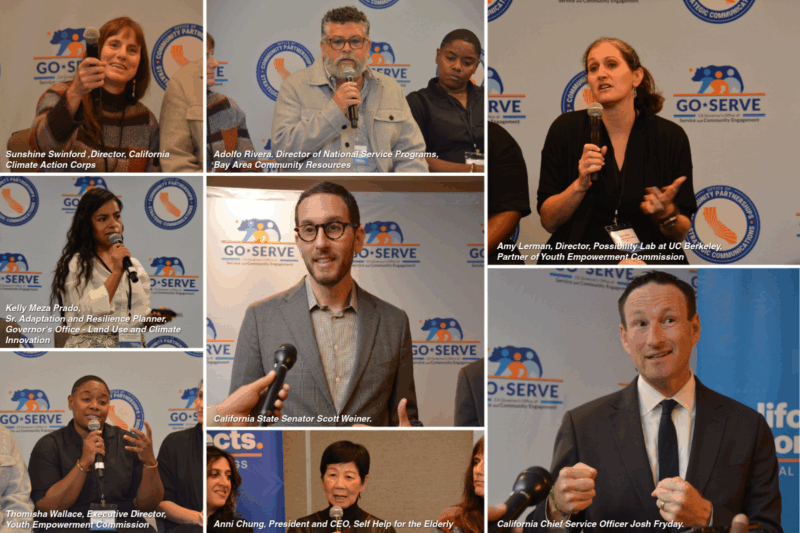
“We are living in a different moment in our history. People feel divided, isolated, polarized,” said California Chief Service Officer Josh Fryday. “We’re asking: How can we bring together the 40 million people that call our state home? As the federal government shuts down, California is powering up. That’s what this day is about.”
State Senator Scott Wiener, chair of the Senate Budget Committee, was the keynote speaker. “People have become super disconnected, propagandized, even brainwashed in some respects. That is deeply unhealthy for society,” he said. “We need to continually strengthen infrastructure and connections at the local level so people don’t feel disconnected.”
Fryday and other organizers emphasized that the day wasn’t just about conversation—it was about actionable opportunities. Attendees could learn how to access state resources, grants, and funding while connecting directly with state agencies and local officials. “At a time when the federal government seeks to divide us, we’re bringing people together. That’s the California way,” Fryday said.
Supporting Communities on the Ground
The GO-Serve initiative is backed by $225 million this fiscal year. San Francisco nonprofit Self-Help for the Elderly received a $300,000 grant last year. The organization provides seniors, particularly Chinese Americans, with programs to maintain independence. “We did phone banking, street fairs, health workshops—it was a very successful year,” said president and CEO Anni Chung.
This year, with a slightly smaller budget, Self-Help for the Elderly is focusing on mental health support for seniors living with trauma from their countries of origin. “There are 200,000 Chinese Americans in San Francisco but just eight clinicians to support them,” Chung said. “Depression, anxiety, suicidal ideation go unaddressed.” A proposed solution is to bring back retired clinicians with state support to provide these desperately needed services.
Reaching Young Men Through Service
The San Francisco convening also highlighted the Men’s Service Challenge, a $5 million GO-Serve investment announced last month to recruit 10,000 mentors, coaches, and tutors for boys and young men. “Civic society needs men to step up and serve while understanding the challenges they face,” said Luis Jimenez Romo, deputy director of external and legislative affairs at GO-Serve. Partnering with Big Brothers, the YMCA, and Mentor California, the initiative encourages youth to engage off-screen and positively impact their communities, gaining mental health, personal, and career benefits in the process.
The initiative emerged after a national poll revealed that 70 percent of young men and boys felt society didn’t care about their well-being. Statistics paint a troubling picture: nearly one in four men under 30 report having no close friends, representing a five-fold increase since 1990. Additionally, labor force participation among men without college degrees has reached historic lows, with roughly one in nine men aged 25-54 neither working nor actively seeking employment.
“Through service, we can help them find purpose, build careers and make a real difference,” Fryday said.
Youth Engagement and Climate Action
The California Service Corps (CSC) also recruits young people to tackle societal and environmental issues in vulnerable communities. Karina Lopez, program manager at CSC partner Frontline Catalysts in Oakland, described a project along the I-880 corridor, where youth leaders led workshops on urban greening, land stewardship, and air quality monitoring. “These communities are most affected by the climate crisis but often excluded from discussions on solutions. Thanks to GO-Serve, we’re fostering a sense of stewardship for the land,” Lopez said.
The convening emphasized connecting young Californians to real-world policy and civic engagement. Thomisha Wallace, executive director of the California Youth Empowerment Commission, described the commission’s team of 14- to 25-year-olds advising the governor, legislature, and education officials. The commission, which held its inaugural meeting in Oakland in September 2024, consists of 13 voting commissioners appointed by the Governor, Senate, and Assembly. “We act as a bridge, bringing perspectives from youth directly into policymaking,” she said. Their work focuses on education, health, and housing, ensuring young people’s voices shape statewide initiatives—particularly those from disadvantaged communities whose voices often go unheard.
Amy Lerman, UC Berkeley professor and director of Possibility Lab, praised the collaboration. “We work with the Youth Empowerment Commission to explore new forms of civic engagement, bringing historically underrepresented voices into the process,” she said. “The creativity and insight from these young people constantly inspire and guide us.”
Climate action also featured prominently. Fryday described the state’s “service pyramid model,” which combines long-term service commitments, hands-on community projects like tree planting, and everyday climate-conscious behaviors to foster a broader culture of environmental responsibility. Fellows like Patrick, an alum of the program, have gone on to lead initiatives such as the Pacific Beach Coalition, illustrating the pipeline from service to leadership.
Adapting to Extreme Heat
Beyond traditional climate initiatives, the convening highlighted innovative approaches to extreme heat—a growing threat across California. Organizers discussed emerging infrastructure projects, including refrigeration systems deployed across counties to preserve food during heat emergencies and power outages, and thermal protective equipment for farmworkers who continue harvesting during dangerous heat waves.
Other initiatives under consideration include installing cooling infrastructure at bus stops in heat-vulnerable communities and deploying mobile nursing teams to provide emergency care during extreme heat events, reducing the strain on emergency rooms when temperatures soar.
Looking Ahead
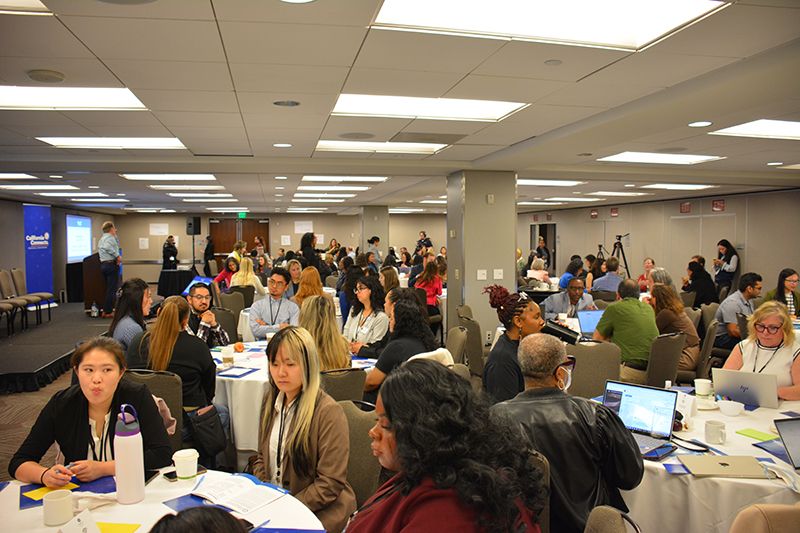
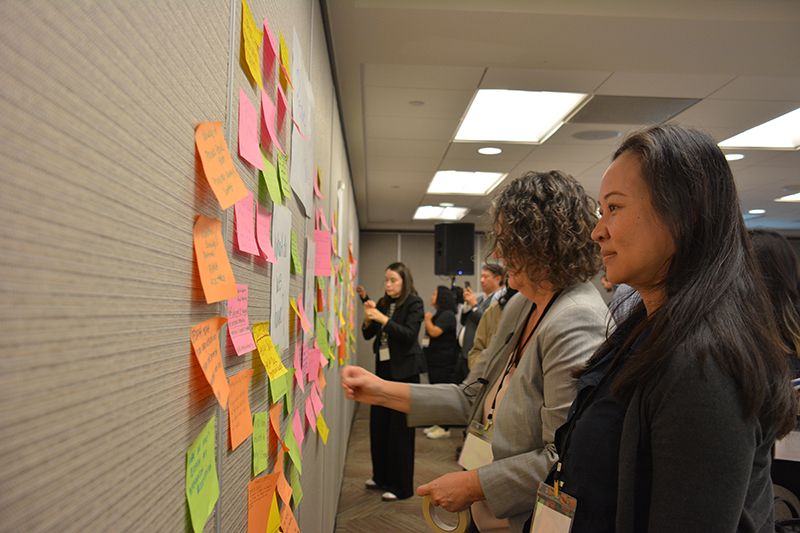
The next California Connects convening was held in Los Angeles on Oct. 15, followed by an event in Sacramento. Upcoming events will be held in Fresno and southern California. The program offers a model for integrating youth, community organizations, and state resources to address local challenges, foster connections, and build a stronger social fabric.
More information on GO-Serve is available at serve.ca.gov.