Medicaid Turns 60 – What’s to Come with Trump’s Bill
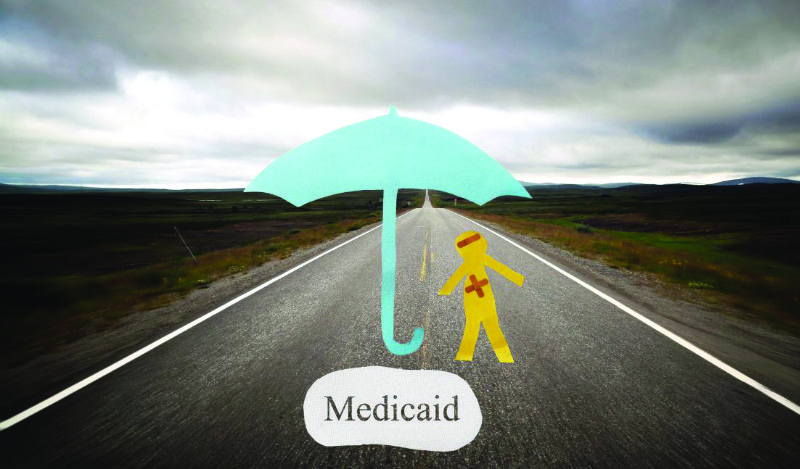
As Medicaid marks its 60th anniversary, the program is confronting the largest rollback of federal health care subsidies in U.S. history.
The One Big Beautiful Act, signed by President Trump on July 4, slashes federal Medicaid spending by 15%, eliminating more than $1 trillion in federal health care and food aid over the next decade. Much of the reduction comes through new work verification requirements and shifting costs onto states.
In a media briefing on August 1, hosted by American Media Community, a panel of experts discussed the effects of Trump’s bill on Medicaid as the program turns 60.
Speakers
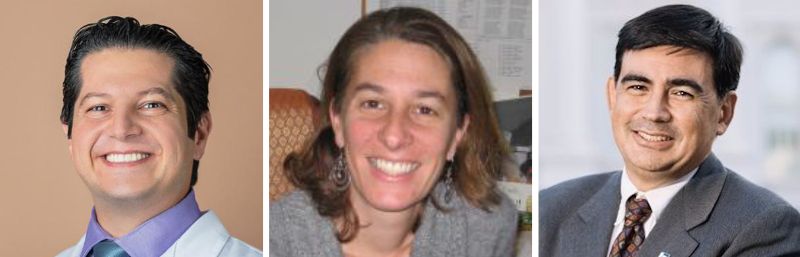
- Dr. Ilan Shapiro Strygler, SVP, Chief Health Correspondent and Medical Affairs Officer, AltaMed Health Services
- Cary Sanders, Senior Policy Director, California Pan-Ethnic Health Network
- Anthony Wright, Executive Director, Families USA
Coverage Losses on the Horizon
The Congressional Budget Office projects the law will leave 11.8 million Americans uninsured by 2034, with another 5.1 million losing coverage due to other provisions — including the expiration of Affordable Care Act (ACA) premium tax credits at the end of this year.
The legislation also cuts $500 billion from Medicare, which serves seniors and disabled Americans. In 2024, 12.8 million people were enrolled in both Medicaid and Medicare.
Experts warn the cuts will strain hospitals, clinics, nursing homes, and maternity wards that rely heavily on Medicaid, particularly in rural areas. Nearly half of U.S. children and 41% of births nationwide are covered by the program. In some states and rural communities, that figure rises above 60%.
“This was a disastrous bill. That it passed is a major setback to health care, health coverage, and health costs,” said Anthony Wright.
Wright pointed to an upcoming September 30 deadline, when Congress must decide whether to extend or eliminate ACA premium tax credits. Without them, premiums could rise by 75% on average for 20 million Americans, and 4.2 million could lose coverage.
“At the end of the day, this is a cut to hospitals, clinics, providers, and state governments,” Wright said. “Congress extended trillions in tax cuts for the wealthy and corporations, but they didn’t even extend the tax credits that help people afford health care.”
A Domino Effect of Disinvestment
Dr. Ilan Shapiro Strygler compared today’s cuts to pre-Medicaid days when families often had to choose between food, education, and medical care.
“My patients before, when there was no coverage, were using the ER as a principal point of healthcare,” he said. “ERs save lives, but they’re not the place to manage diabetes, high blood pressure, or mammograms.”
Strygler also warned of compounding challenges for immigrant families, who may avoid care due to heightened fears under federal data-sharing agreements with Homeland Security. “Complications are going to go up, things we can prevent, and then the cost will start going up,” he said.
Why Medicaid Matters
Medicaid remains one of the most cost-efficient U.S. health programs, with administrative costs around 5% of spending — far lower than the 12–18% overhead typical for private insurance.
But advocates stress that its value extends beyond efficiency. “Medicaid came into existence 60 years ago as a Civil Rights-era program to ensure that government provided basic health care to poor people,” said Cary Sanders.
“It’s foundational to advancing health equity,” she continued. “A cut is not just to the individual. It’s to the entire system.”
California as a National Model
California projects a $30 billion loss in federal funding and coverage losses for 3.4 million residents. A UC Berkeley Labor Center study estimates this will mean 217,000 lost jobs, $37 billion in reduced economic output, and $1.7 billion less in state and local tax revenue.
Still, the state’s historic expansions of Medi-Cal — its version of Medicaid — may provide a roadmap for resistance.
“No matter how people try to sell this bill, the more people know about it, the less popular it is,” Sanders said. “Maybe now, in this moment where we have so much to lose, it’s time to make sure everybody is paying their fair share.”
All photos provided by ACoM