The Power of Holograms – 3D Calling Systems or Brain Decoders
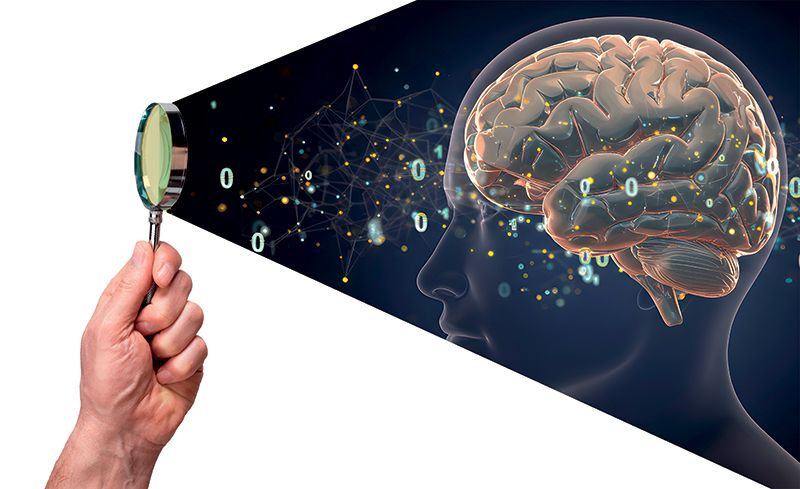
When most people think of holograms, they think of the 3D calling system from Star Wars or the holograms on credit cards used to deter counterfeiting. What may be a surprise is just how essential the technology for making holograms is to neuroscience. It may seem like there’s very little relation between creating a 3D projected image with some lighting trickery and studying the way our brains give rise to behavior. The two have become increasingly intertwined, writes Vikshar Athreya.
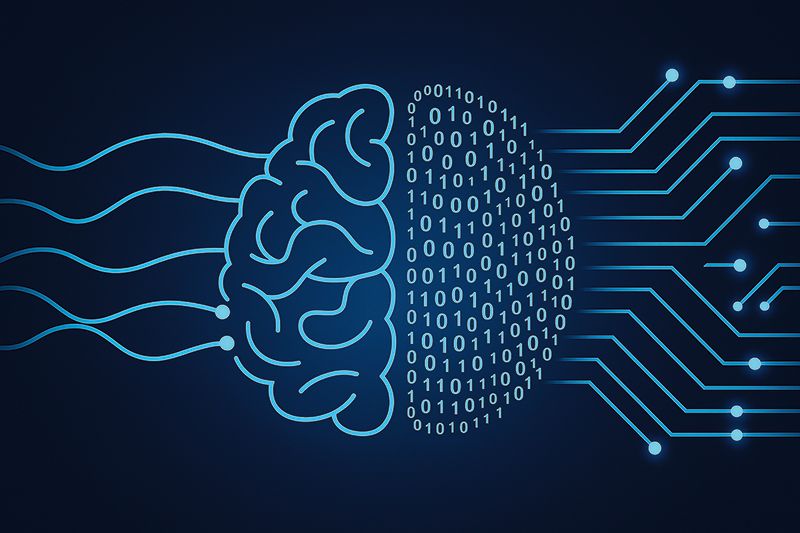
A key goal of neuroscientists is to understand how the brain computes to control actions and behavior. Much like a regular computer, the computations in the brain can also be simplified to binary “ones and zeros,” where neurons that fire are “ones” and neurons that don’t are “zeros.” This simplification gives rise to a multitude of possibilities.
A small population of 60 neurons could have the equivalent of 2^60 “ones and zeros” possibilities at any given time. Roughly a million trillion possibilities for those who hate math. And this is just with a small population of 60 neurons. For perspective, the mouse nervous system has ~70 million neurons. Humans? On the order of billions of neurons. How do we then figure out what patterns of neural activity are important for certain behaviors?
The answer lies in two key technological innovations. Much like learning a new language, we can decode this neural activity by “reading” it–observing what individual neurons do and using principles from data science to decompose the role each neuron plays in the population. Since the development of gCAMP, a fluorescent sensor that lights up whenever neurons fire, decoding neurons is often achieved through a technique called 2-photon imaging. Essentially, neuroscientists view movies of neurons firing in real time, quantify when they fire and to what extent. This information helps decode how individual neurons respond during a certain perception or behavior.
The second key technological innovation is to “write in” patterns of neural activity. To do this, we need a way to activate only certain groups of individual neurons without affecting their neighbors, and with millisecond temporal precision. This is where holography comes in. Roughly 20 years ago, scientists studying proteins like those found in the eye came across a startling discovery. If blue light shined onto neurons genetically engineered to carry this protein, the neurons would fire reliably. This discovery became known as optogenetics, and soon the entire world of neuroscience was obsessed with using light to manipulate neural activity. However, these manipulations could only be done to groups of hundreds of neurons, rendering them useless for writing in more precise patterns of neural activity.
The solution came in the form of holograms. Much like the calling system from Star Wars, a hologram is simply a way of reconstructing a specified 3D light pattern. For this, we can use a device called a spatial light modulator–sets of small liquid crystals that manipulate the phase of a beam of light. Yes, we can create holograms in the world of science. The modulator helps pattern the beam of light in precise ways such that some parts of the light’s wave arrive at certain times to certain places. This leads to constructive interference at certain focal points. Then computer algorithms are used to specify what the pattern of liquid crystals in the spatial light modulator is, allowing us to concentrate our beam of light towards areas we want (i.e., the cells we want to activate) without affecting their neighbors.
From this, infinite holograms can be produced to precisely “write in” patterns of activity to the neurons we see, and then “read in” their responses with specialized imaging. This technology is immensely powerful, used to understand complicated neural computations, such as those involved in vision. From this technique, we now know that it only takes a few neurons in the visual cortex to drive a unique visual perception, with the larger population being mostly irrelevant for distinguishing the things we see.
As we dive into the AI age, with GPT and LLMs becoming the talk of the town, it’s very easy to forget that we too have always lived with computers inside our heads. Much as AI engineers try to understand how to train their models to produce specific outputs, neuroscientists have worked just as tirelessly trying to understand how the brain gives rise to behavior. With innovative techniques such as holography, we can now “feed in” patterns of neural activity to truly understand how our brain gives us the richness of experience we possess. Ultimately, this takes us one step closer to understanding at a core level who we are.