Keeping the California Dream Alive – Supporting Immigrant Students

With federal protections for immigrant students under threat, California’s California Dream Act Application (CADAA) remains a crucial support system.
In a media briefing on June 24, hosted by American Community Media, a panel of experts discussed California’s relentless commitment to stand as a support beam for immigrant students.
Speakers
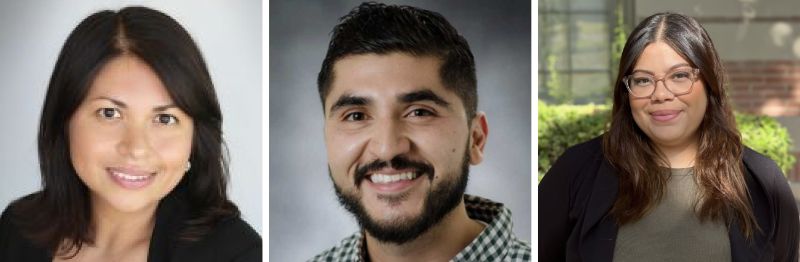
- Dr. Daisy Gonzales, Executive Director, California Student Aid Commission (CSAC)
- Christopher Gonzales, Chief Strategy Officer, 10,000 Degrees
- Celeste Mar, Student, CSU Long Beach
Last spring, CSAC — the state agency responsible for distributing over $3 billion in financial aid — reported a 38% drop in CADAA applications and a 14% drop in Free Application for Federal Student Aid (FAFSA) applications statewide.
While drops in aid applications aren’t new — the troubled FAFSA rollout last year led to a 9% national decline by August 2024 — recent declines have been attributed to fear. Many immigrant students worry their information could be shared with federal agencies and used to target them or their families for deportation.
Although there’s currently no known data-sharing agreement between the Department of Homeland Security (DHS) and the Department of Education, which oversees FAFSA, DHS does share data with other federal agencies including the IRS, U.S. Postal Inspection Service, and HUD.
“Many of the Californians that we are neighbors with — our families, teachers, coworkers — are living in unprecedented times where their data is being shared between federal agencies to attack them and target them in the name of federal immigration enforcement,” said Dr. Daisy Gonzales.
“Our students are in survival mode,” she continued. “Many of them are thinking about not pursuing their higher education as the future seems very unlikely, and in particular a future in this country. Choosing to pursue your dreams, choosing to apply for financial aid, is an act of resistance.”
Roughly 55% of California students receive federal grants, close to the national average. But among aid applicants with at least one undocumented parent, numbers dropped 44% in February 2025 compared to the year prior — from 30,000 to just 17,000.
While overall student aid applications are now on the rise again in California, CSAC continues to see lagging numbers among undocumented, mixed-status, and refugee families.
Gonzales urged these students to apply for CADAA, especially those ineligible for FAFSA. “The data that students complete will only be used to determine state and institutional aid eligibility, and it is not shared with the federal government,” she emphasized.
Students with legal documentation can fill out both FAFSA and CADAA. “The student applies, they tell us where they intend to go, where they got accepted, and then we match their aid to their institution,” said Gonzales.
While aid deadlines vary across schools, the final deadline for California community college applicants this fall is September 2. Multilingual help for FAFSA and CADAA is available through CSAC.
Even as California faces a $12 billion budget deficit, state leaders are expected to finalize a $321.1 billion annual budget this week. Gonzales affirmed that higher education remains a priority: “What I have seen in the budget so far confirms that.”
Since its creation in 2011, CADAA has opened doors for thousands of students. Christopher Gonzales shared how former students are now working as mentors. “It’s a cyclical change that’s extra impactful,” he said. “You’re lifting your family out of generational poverty.”
He recalled a student from a mixed-status family in Sonoma County. “They had a lot of instability and were hesitating because of the misinformation out there,” he said. “With CSAC, we did fact-checking, met with the family, and assured them it’s safe to apply through CADAA. They did — and we’re now helping with their aid package.”
“I’m a first-generation student. I remember filling out FAFSA in high school, and even then, I was scared. What would happen to my parents’ information?” said Celeste Mar, a aspiring school counselor.
Mar sees that same fear: “Our students are still hesitant. They believe that by not filling out these applications, they get to protect their families,” she said.
Mar described immigrant students acting as front-line support for their families — even just running errands can be risky. “Especially in L.A., with ICE raids happening,” she added. “Although CADAA is reliable, that fear will remain until you help families make informed decisions.”
“I grew up in a low-income immigrant neighborhood,” she said. “I want to be that support for students — to help them realize that higher education is possible.”
All images provided by ACoM.