Is it Safe to Travel Outside the Country?
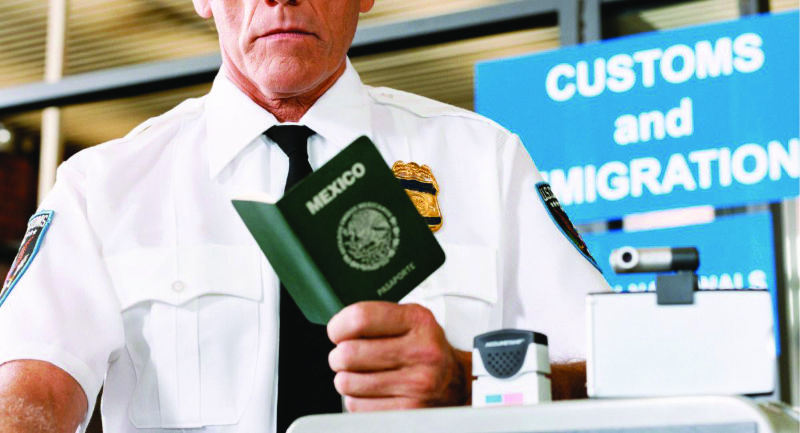
As high-profile deportations, detentions, and denials of entry make headlines, Americans and foreign nationals alike are asking a pressing question: who is truly safe to enter or leave the country?
In a media briefing on May 2, hosted by American Community Media, a panel of experts discussed the concerns and safety of travelers in the U.S. and what rights they have.
Speakers

- Zahra Billoo, Executive Director, Council on American-Islamic Relations, San Francisco Bay Area (CAIR-SFBA)
- Richard Herman, Founder, Herman Legal Group
- Madhurima Paturi, Founder and Partner, Paturi Law
- Xiao Wang, Founder and CEO, Boundless Immigration
At the heart of growing concerns is a dramatic spike in border stops and electronic device searches. Customs and Border Protection (CBP) agents searched over 47,000 electronic devices last year—ten times more than a decade ago—and that number is expected to grow significantly.
“The U.S. is no stranger to making the Constitution a document of convenience,” said Richard Herman. “We’ve interned American citizens in camps during World War Two; whether Japanese, German or Italian Americans. What’s different this time are the vast amounts of technology that can be deployed by the government against us, whether facial recognition technology or AI.”
While the percentage of affected travelers remains low—just 0.01% of the 420 million travelers processed by CBP in fiscal year 2024—advocates say the stakes are high. Of the 47,047 electronic searches, 90% were “basic” (involving review of messages and visible content) while 10% were “advanced,” involving deep forensic data extraction.
And for international students, the consequences have been far more severe.
In March, ICE used the SEVIS database to cross-reference 1.3 million foreign students with a federal criminal database. The result: over 6,400 “hits,” many tied to minor incidents—such as dropped charges or minor traffic violations. These automatic red flags led to school record terminations and roughly 3,000 revoked visas.
The fallout was swift. Over 100 lawsuits were filed, and dozens of restraining orders issued. By late April, the Trump administration reversed the terminations and began work on a new policy to vet student visa holders more fairly.
“The volume of calls we received at the end of the march through the first two weeks of April was outstanding — over 300, especially students on the F-1 visa, many Indian, saying their SEVIS statuses got terminated,” said Madhurima Paturi, “… for criminal checks as simple as a speeding ticket or not turning on your signal light.”
Although the terminations were reversed, many students had already self-deported out of fear.
“With the F-1, your status is gone on the same day you’re no longer active,” Paturi explained. “A lot of them were about to graduate, a lot had work permits … and from the day you receive that email, you can’t go to work, attend class or take your finals.”
“There’s going to be an economic cost for all of this,” Herman added. “International students are increasingly saying ‘Why should I come here? It’s not worth it. They don’t want me,’”
In 2023, international students contributed $50 billion to the U.S. economy through tuition and living expenses. Foreign tourists added $100 billion in leisure spending, and business travelers another $23 billion.
Last December, Tourism Economics forecasted 8.8% growth in foreign visitors and a 16% rise in spending for 2025. But by April, projections had reversed: a 9.4% decline in visitors and a potential $9 billion loss.
“I call this ‘The Great Unwelcoming,’” said Herman. “airports now are not just a place to land and walk through customs. They’re immigration enforcement zones, and it’s not just foreign nationals. We had multiple cases of American citizen lawyers being detained, their electronics being confiscated and attorney-client privacy privilege nearly invaded.”
“Everybody should be concerned, not just the immigrant community,” he warned. “It’s not like they’re going to flip a switch and your rights come back.”
Zahra Billoo agreed, “But they don’t have the right to hassle-free travel — that’s a privilege. They could detain you, question you, they could search your belongings, including your electronic devices.”
She advises travelers to disable biometric locks on phones. “You can be forced to use your fingerprint or face to unlock your phone, you can never be forced to turn over your password … If they take away your phone, they’ll be required to give you a receipt, and they’ll still be required to talk to a supervisor or judge to get further into your phone than they could get if you didn’t give them the password.”
Her advice to non-citizens, including green card holders: minimize unnecessary travel.
Billoo recalled one particularly difficult case from six weeks earlier: “student visa holder in good standing on all accounts, who was from one of the published countries on the eve of when we thought another ‘Muslim ban’ was coming … He said ‘I’m engaged. My wedding is set for a few weeks from now. Should I go?’ I explained that he might not be able to return if the ban was implemented, and he chose to delay his wedding.”
“It’s a difficult decision for non-citizens at the border: ‘Am I going to assert my right to remain silent and compromise my ability to re-enter, or am I going to sacrifice privacy and potentially endanger not just myself but the people connected to me?’” she said. “Less than .01% of people are impacted by this, but one of its intentions is to cause everyone to be fearful.”
A growing contributor to that fear is CBP’s use of Form I-407, which allows green card holders to voluntarily surrender permanent residency.
People are being misled asserted Xiao Wang. They’re told they must sign or they can’t return, but many don’t fully understand what they’re signing. He urges people: Don’t sign anything without legal counsel.
While green card holders don’t have the right to an attorney during initial CBP questioning, they do have the right to legal representation during longer detentions—and the right to a hearing before their green card can be taken.
Wang emphasized that legal residents maintain the right to re-enter unless a judge rules otherwise or unless they’ve been out of the country for more than 180 days—grounds which may suggest abandonment of residency.
He advises those planning extended trips to apply for a re-entry permit and carry documentation like tax returns, lease agreements, pay stubs, and utility bills to demonstrate ongoing U.S. ties.
“We’re in unprecedented times,” Wang said. “Even U.S. citizens are under heightened scrutiny in the way that we haven’t seen before. The general advice we give is: Know your rights before you go, don’t sign anything you don’t understand, and if something doesn’t feel right, ask questions.”
Images provided by ACoM.