School Can Be So Much More – Re-envisioning the Typical School Day

A growing number of educators are reimagining the school day — and what it means to be a successful graduate.
In response to chronic absenteeism and declining academic performance nationwide, new initiatives are restructuring the traditional yearly credit system, or Carnegie units, first established by the Carnegie Foundation for the Advancement of Teaching in 1906. These updates integrate career-based learning, work experience internships, and early college courses into the curriculum.
In a media briefing on April 4, hosted by American Community Media, a panel of experts discussed how we can restructure the school day to help curb these issues.
Speakers
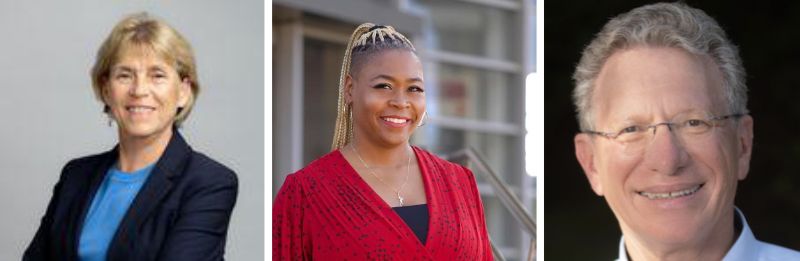
- Anne Stanton, President of the Linked Learning Alliance, an expert on “linked learning,” which not only makes learning more relevant and engaging and prepares students for their careers and life in general
- Shalonda Gregory, Principal of MetWest High in Oakland, Ca., which is implementing a model to create innovative learning environments developed by Big Picture Learning
- Louis Freedberg, a long-time education journalist and former Editor of EdSource who is now Executive Producer of Sparking Equity, a podcast tracking education reforms
“One of the positive things that came out of the pandemic is that everybody wanted to get back to school … then we saw chronic absenteeism rates reach record levels,” said Louis Freedberg.
“This reinforced that our current learning opportunities are not sufficient for young people to get up every morning and want to go to school,” he added.
In the 2021-22 school year, 29.7% of U.S. students — nearly 14.7 million — were chronically absent, compared to 16% in 2019 before the pandemic. That number dipped slightly to 27.9% in 2022-23.
The 2024 National Assessment of Educational Progress, known as the “nation’s report card,” also revealed troubling results: for the first time, a third of eighth-grade students scored below “basic” in reading, with reading scores down five points and math scores down eight points compared to 2019.
“Keeping kids engaged in school presents a crisis for all forms of education,” Freedberg said. “The notion that we should shoehorn learning into these six-hour daily bites doesn’t work for all kid.”
He emphasized that many critical skills — like critical thinking, independent work, collaboration, and persistence — are just as important for students’ success as traditional academic knowledge. Several states, he added, are now working to measure these “durable skills.”
In Indiana, Nevada, North Carolina, Rhode Island, and Wisconsin, the Carnegie Foundation is collaborating with Educational Testing Service (ETS) to pilot projects assessing students on these skills. Last October, North Carolina received nearly $4 million from the U.S. Department of Education to launch a “Skills for the Future” assessment initiative.
North Carolina and at least 16 other states are also crafting “graduate portraits” — new frameworks that define the broad range of skills students should possess when they graduate.
“This is something that’s definitely picking up steam across the country,” said Freedberg. “What do we want our graduates to leave school with? Not just whether you got A’s or B’s, but broader descriptions of a variety of skills.” These involve critical social skills such as networking, communication, cultural competence, civic engagement, and conflict resolution.
“When modern public schools were started, Carnegie developed credit units to fuel the workforce. But in order for people to be really good workers, they need to be well-rounded,” said Shalonda Gregory.
Big Picture Learning (BPL), a network of over 140 schools in the U.S. and more than 100 worldwide, encourages students to develop real-world skills through field internships and mentorships up to two days a week, typically Tuesdays and Thursdays at MetWest, while attending core curriculum classes on the other days.
Every ninth grader at MetWest creates an Individual Learning Plan with specific goals for not only careers and education beyond high school, but also personal development.
“If a student is really interested in becoming an architect, even in standard classes like English, math and science, we try to connect the content to that interest,” Gregory said. “We also help them find internships with architecture firms so that they’re not just graduating with a diploma, but with career-ready life skills. Some of our students have even graduated with associate’s degrees.”
One current senior, Johnny, “is really passionate about skateboarding. He’s been interning at a skateboard shop, and previously at auto shops doing collision repair and general maintenance,” Gregory shared. “Because of those opportunities, he’s set to work at the skateboard shop after graduation and do car repairs as a side hustle to support his future.”
Though MetWest is just 23 years old, its Linked Learning model — blending academics with work-based experiences — has inspired similar programs throughout the Oakland Unified School District, including internship programs, college prep support, and a year-long graduate capstone project.
“High school is not the end game,” said Anne Stanton. “In the very recent past, we had a very bifurcated ’50s model where students were sorted into vocational or college tracks. But at this period in their lives, young people can contribute in so many ways — and in our country, we think a lot less of what a 16-year-old can do than we should.”
In California alone, the LLA is rolling out work-based learning initiatives in 80 school districts and 250 schools, serving 330,000 students statewide, funded by a $500 million investment from the state’s Golden State Pathways college and career readiness program.
Out of California’s 977 school districts, approximately 5.5 million students are enrolled statewide.
“We’d like to get 600,000 young people in California having these experiences,” Stanton said. “But for young people to apply their academic learning in the real world, we need deeper engagement from the employers offering these opportunities.”
“Even school district superintendents often turn over every two years,” she added. “It’s about who owns the vision of engaging youth. If it’s owned by students, families, communities, and employers, you can’t break it down, no matter who’s in leadership.
“The core of our work to support young people in the real world,” Stanton said, “requires that it’s never just one teacher or one part of their lives doing it.”